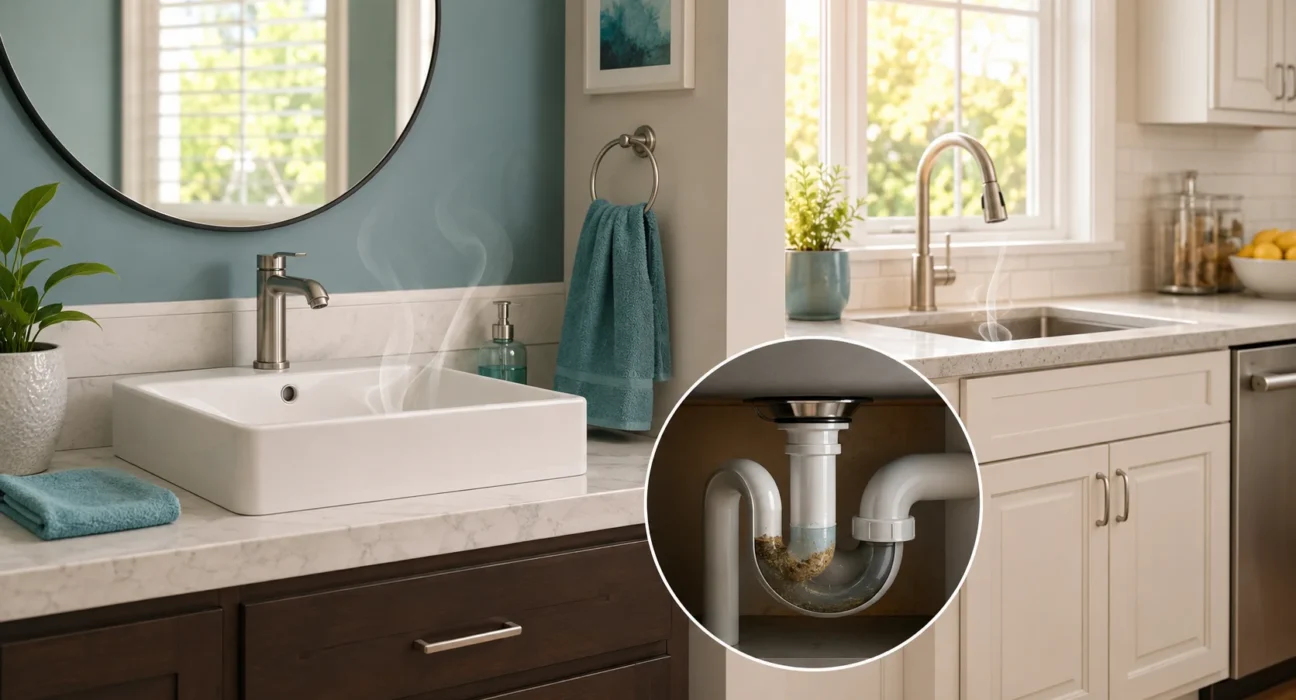
If you are living in USA and your bathroom or kitchen smells faintly of sewer every August but seems fine in November, you’re not imagining it. Heat dramatically amplifies drain odor and the smell you’re catching isn’t actually the drain itself. It’s bacteria, biofilm, evaporating P-traps, or sewer gas escaping somewhere it shouldn’t.
If you smell actual gas (the rotten-egg additive in natural gas), evacuate and call your gas utility don’t troubleshoot drains. Sewer gas is different (and methane component is naturally odorless; the smell you detect is hydrogen sulfide).
Why Drains Smell Worse in Summer
Three things happen in hot weather that combine to make drains smell:1. Bacterial growth accelerates:
The biofilm that lines the inside of every drainpipe — a slimy mix of soap scum, hair, food residue, and bacteria — multiplies faster at warm temperatures. More biofilm means more bacterial metabolic byproducts. Many of those byproducts are sulfur-based and smell like rotten eggs or sewage.2. P-traps evaporate faster:
The water sitting in every drain’s P-trap is your only physical barrier against sewer gas. In hot, dry conditions, that water evaporates faster than usual. Drains you don’t use often guest bathroom, basement floor drain, utility sink — can have completely dry traps within 1-3 weeks in summer, letting raw sewer gas straight into your home.3. Warm air rises and carries odor more efficiently:
Even when smells are present in cooler months, summer heat and convection currents move that air through your house instead of leaving it pooled in drains. You smell it because it’s actively moving past you.Step 1: Identify the Type of Smell
Before you start cleaning, figure out which smell you have. They mean different things.| Smell | Likely Cause | Where it’s coming from |
|---|---|---|
| Rotten eggs / sulfur | Bacterial biofilm | Inside the drain pipe or P-trap |
| Raw sewage | Dry P-trap OR vent stack issue | The drain itself, or the bathroom in general |
| Musty / earthy | Mold or stagnant water | P-trap or wet wall behind fixture |
| Rotten food / garbage | Buildup in disposal or trap | Kitchen sink, specifically |
| Mildewy / sour | Biofilm in tub/shower drain | Tub or shower |
| Gas / methane | Sewer gas leak | Cracked drain pipe (call a plumber) |
Step 2: Check P-Trap Water Levels
This is the first and easiest check, and it solves a surprising number of cases on its own. Walk through your house and pour about a cup of water down every drain — including ones you rarely use:- Floor drains in basement, laundry room, garage
- Utility sinks
- Guest bathroom sinks, tubs, and showers
- Anywhere you have a drain you haven’t used in 2+ weeks
Step 3: Clean the Biofilm Out of the Drain
If P-trap refills didn’t solve it, the smell is coming from biofilm inside the drain pipe itself. Standard drain cleaning approaches:For sink and tub drains:
The vinegar-baking soda method:
- Pour half a cup of baking soda directly into the drain.
- Follow with half a cup of white vinegar. It’ll foam up.
- Wait 15 minutes.
- Flush with a kettle of boiling water (or very hot tap water if pipes are PVC).
- Repeat weekly until the smell is gone.
Enzyme drain cleaner:
Products like Bio-Clean or Earthworm Enzyme Drain Cleaner contain live bacteria and enzymes that digest the organic material biofilm is made of. They take longer (a couple weeks of nightly application before bed) but they work continuously and are safer for old plumbing than chemical cleaners. About $15-25 per container.Physical removal:
For tub and shower drains, pull the stopper or strainer and use a hair-catcher tool (the cheap plastic kind with barbs) to physically pull out the gunk that’s collected just below. This alone often resolves bathroom drain odor. Wear gloves — what you’ll pull out is not pleasant.For the kitchen sink:
The drain itself is one source. The garbage disposal is another, and it’s often the bigger culprit.Clean the disposal:
- Run ice cubes and rock salt through the disposal with cold water — the abrasion scrapes biofilm off the impellers.
- Follow with a sliced lemon to refresh.
- Pull the splash guard out (the rubber piece in the disposal opening) and clean both sides with hot soapy water. It traps food residue you can’t see from above.
- For severe odor, fill the disposal halfway with ice, add a cup of bleach, let sit 5 minutes, then run with cold water.
Step 4: Check the Plumbing Vent Stack
If you’ve refilled traps, cleaned biofilm, and the smell persists — especially if it’s a strong sewer smell rather than a mild musty one — the issue may be your plumbing vent stack. Every plumbing drain system has vertical pipes that vent through the roof. They serve two functions: they let sewer gas escape harmlessly above the house, and they equalize pressure so traps can drain properly without suctioning out the water seal. When a vent stack is blocked (leaves, bird nests, animal carcass — yes, really), pressure imbalances pull water out of P-traps with every flush. You’ll often notice:- Gurgling sounds in drains when other fixtures are flushed.
- A toilet that bubbles when the washing machine drains.
- Sewer smell that gets worse after you use other fixtures.
- All your traps inexplicably going dry even with regular use.
Step 5: Look for a Sewer Line Issue
If smells persist through all of the above, the issue may be in your main sewer line — a cracked pipe, a damaged cleanout cap, or a partial blockage that’s letting sewer gas escape upstream of your fixtures. Walk your yard and basement looking for:- Sewer odor outside near the cleanout (usually a 3-4 inch capped pipe in your yard).
- A patch of grass over the lateral line that’s unusually green or sunken.
- Damp areas in the basement near where the main drain exits the foundation.
- A persistent earthy/sewer smell in one specific area of the basement.
What NOT to Do
A few common mistakes that make things worse:- Don’t pour chlorine bleach down a drain that connects to a septic system. It kills the bacteria the septic system relies on.
- Don’t use chemical drain cleaners as a smell fix. They damage older metal pipes, don’t actually clean biofilm thoroughly, and the fumes are dangerous.
- Don’t ignore a smell that gets stronger over weeks. Persistent or worsening sewer odor often indicates a real problem — vent blockage, cracked pipe, or sewer line damage — not just biofilm.
- Don’t use scented drain “fresheners” as a long-term fix. They mask odor without addressing the source, and the chemicals can damage seals over time.
Prevention: Habits That Keep Drains Smelling Neutral
Drains that get regular maintenance rarely develop summer odor problems:- Once a month: Run the vinegar + baking soda routine on any drain you use heavily (kitchen sink, primary shower).
- Once a week in summer: Pour a cup of water into any unused drains to maintain P-trap seal.
- Quarterly: Pull and clean the pop-up stoppers in bathroom sinks. The gunk that builds up just under them is responsible for half of bathroom-sink odor complaints.
- Annually: Clean refrigerator water lines, ice maker components, and any other drain-adjacent fixtures.
- Before summer: Walk every drain on your Summer Plumbing Maintenance Checklist and clear slow-running ones before they become smell-running ones.