What Is a Drain Cleanout? How to Find It and When Homeowners Need It
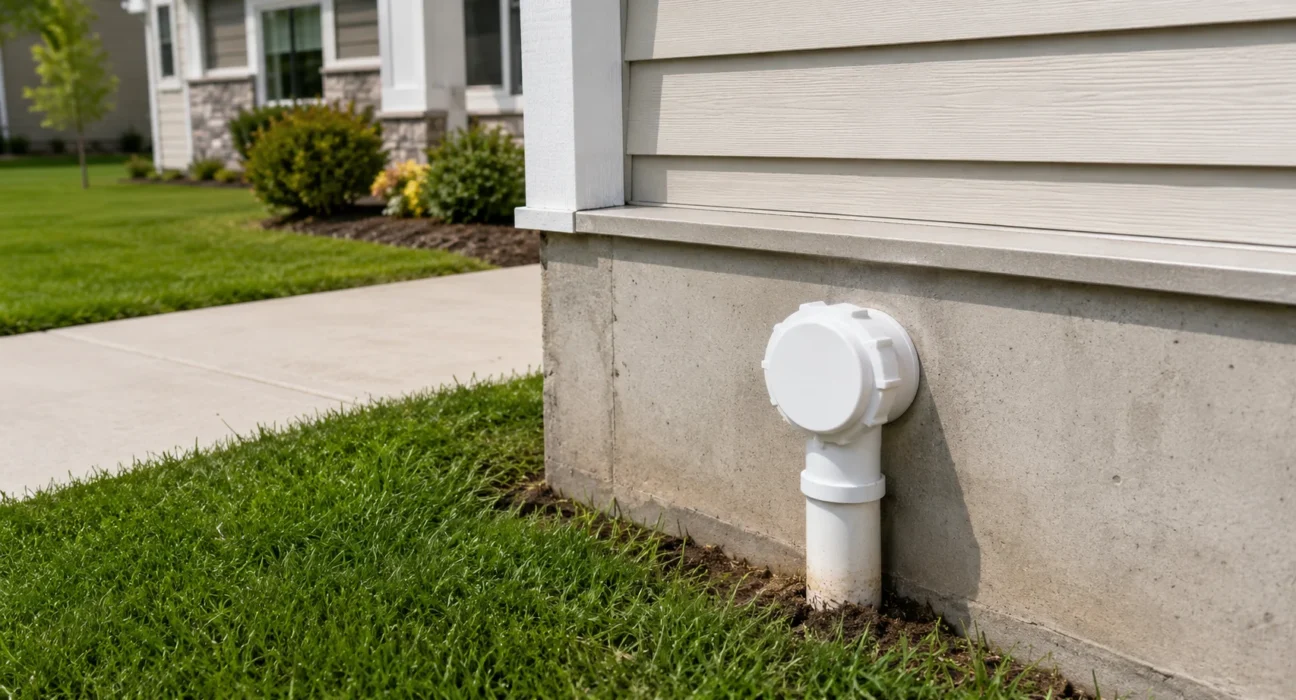
A drain cleanout is an access point for a plumber to get into your drain or sewer line without cutting walls or digging first. Usually it’s a capped pipe, a round plug or a white PVC cap near the home, basement, crawl space, garage or yard.
If your toilet bubbles, drains are slow in multiple places, or sewage backs up in a tub, the cleanout might be the first place a plumber checks. It helps them snake, inspect or hydro jet the line with less mess and less guesswork. If the backup happens after storms, read our guide on sewer line backup after heavy rain to understand why rain can overload or expose sewer problems.
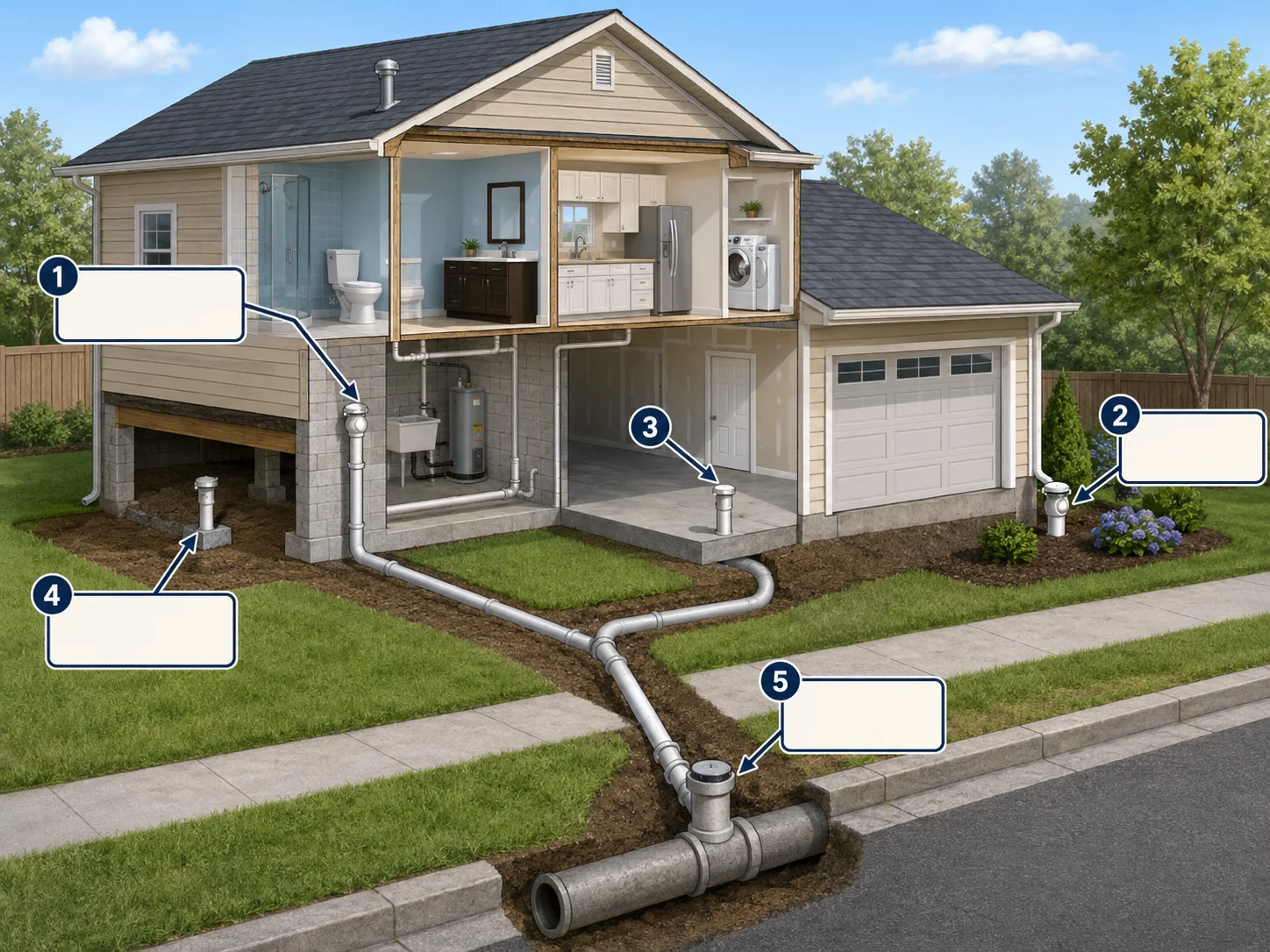
Common places to look for a plumbing cleanout around your home, including the basement, garage, crawl space, outside foundation, and yard near the sewer line.
What Does a Drain Cleanout Look Like?
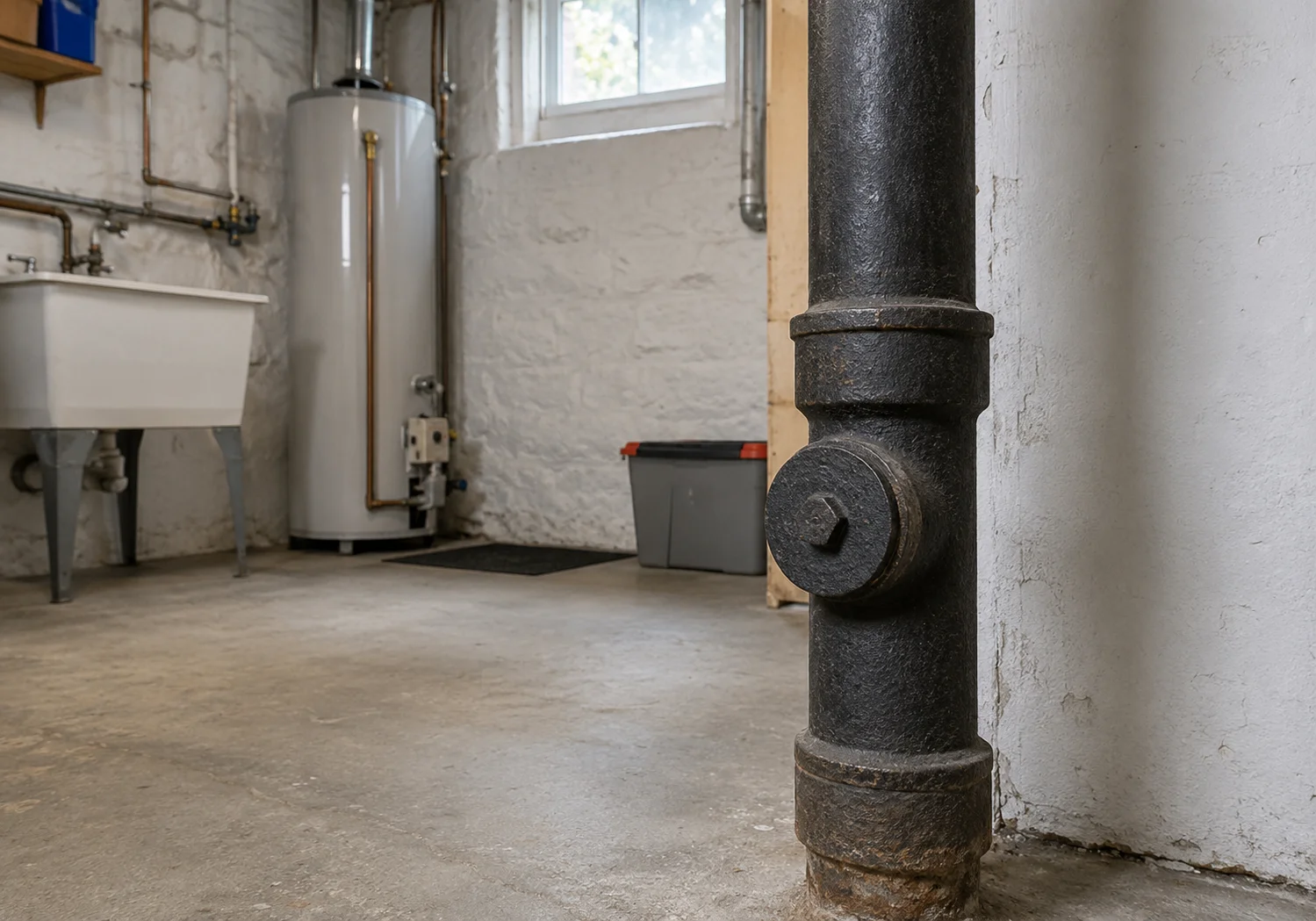
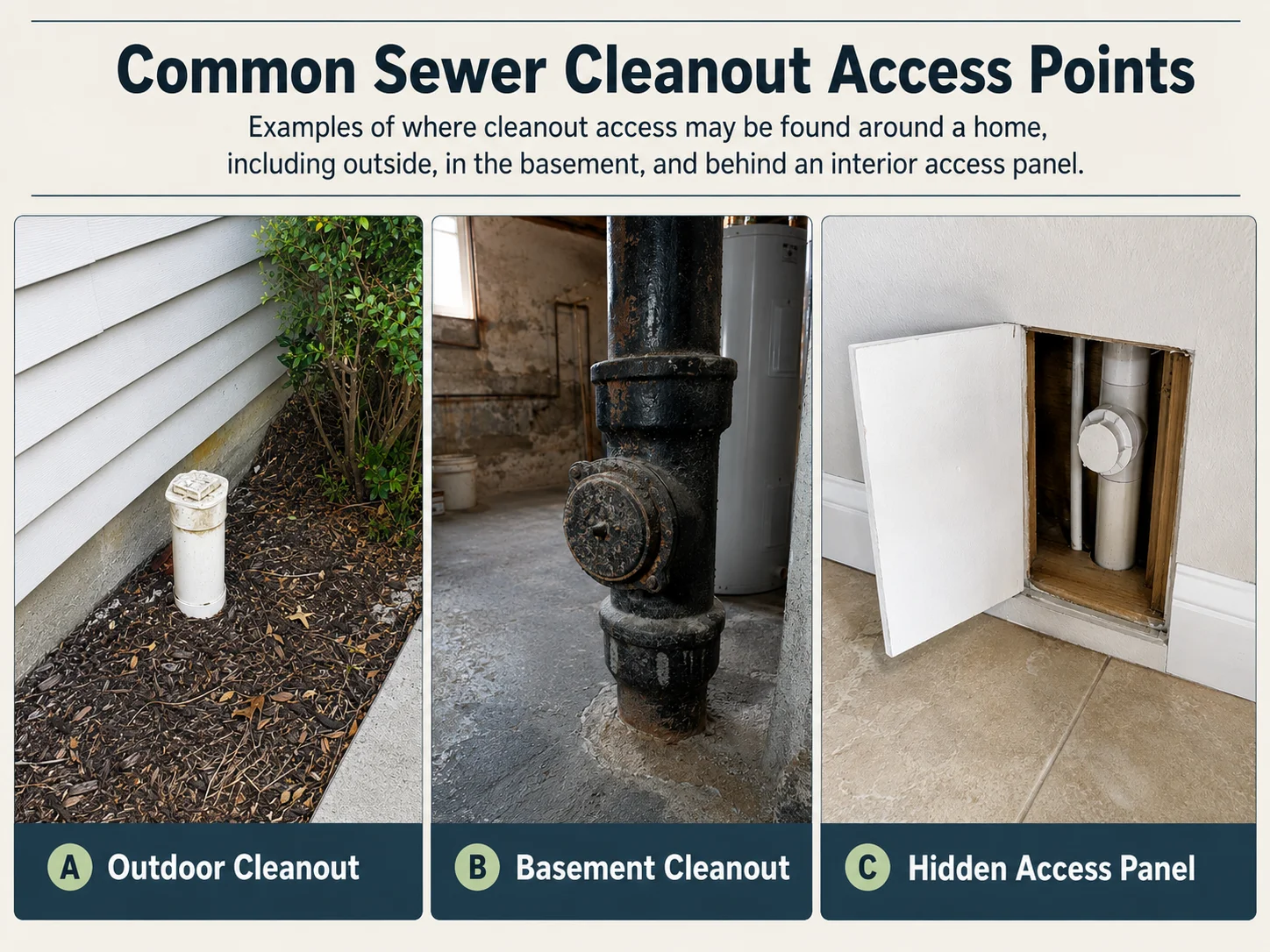
Most cleanouts are simple. You may see a short pipe with a screw-on cap. It may be white PVC, black ABS, brass, or cast iron. On older homes, the cleanout may look like a metal plug with a square nut in the middle.
Outdoor cleanouts are often near the foundation or along the path from the house to the street. Indoor cleanouts may be in a basement, utility room, laundry area, garage, or crawl space.
Why a Cleanout Matters During a Clog
A cleanout gives the plumber a better path into the pipe. Without one, they may need to remove a toilet, open a drain trap, access the roof vent, or cut into a pipe. That adds time, mess, and cost.
A cleanout is like a service door for your plumbing system. You hope you do not need it often, but when a main drain clogs, it can save a lot of trouble. A cleanout also makes it easier for plumbers to use tools like a drain snake or hydro jetting equipment without removing fixtures first.
Common Places to Look for a Drain Cleanout
Outside near the home foundation.
In the basement near the main drain stack.
In a garage or utility room.
In a crawl space near the main plumbing line.
Near the laundry area or water heater room.
In the front yard between the house and sewer connection.
Behind a removable wall panel in older homes.
If you cannot find one, do not panic. Some older homes have poor cleanout access, buried cleanouts, or no easy exterior cleanout. A plumber can often locate the line with a camera or pipe locator.
When You Should Not Open a Cleanout Yourself
A cleanout cap can hold back dirty water under pressure. If sewage is backed up behind the cap, opening it too fast can release wastewater into your basement, yard, or face. That is why cleanout caps should be treated with caution. Do not open a cleanout yourself if toilets are backing up, sewage smell is strong, water is standing in tubs or floor drains, or you hear pressure behind the cap. In those cases, call a plumber and keep children and pets away from the area.
Drain Cleanout vs Floor Drain vs Vent Pipe
Part
What it does
Homeowner mistake
Drain cleanout
Access point for clearing a drain line
Opening it when sewage is backed up
Floor drain
Collects water from a basement or utility floor
Assuming it can clean the main sewer line
Vent pipe
Lets air into the plumbing system
Trying to clear a clog from the roof without proper equipment
Trap
Holds water to block sewer gas
Removing it without a bucket or plan
Why Plumbers Ask About Cleanout Access
When a plumber asks, “Do you have a cleanout?” they are not trying to confuse you. They are trying to understand how fast they can reach the clog and what tools they can use safely.
If you know where your cleanout is, take a photo before calling. Send it to the plumber if they ask. It can help them bring the right equipment and avoid wasting time looking around the property.
Examples of common places where sewer cleanout access may be found, including outside the home, in the basement, and behind an interior access panel.
What If Your Home Isn’t Easy to Cleanout?
Sometimes there are cleanouts hidden with mulch, behind drywall, under landscaping or hidden by storage. If the plumber can’t get to cleanout access they may need to take out a toilet or use another entry point.
If you have a repeat main drain problem, see if an exterior cleanout makes sense. It can also help make future drain cleaning easier, especially if your home has trees, a long sewer line or past backups.
FAQ
What is the purpose of a drain cleanout?
A drain cleanout gives access to the drain or sewer line for cleaning, inspection, and clog removal.
Where is the main drain cleanout usually located?
It may be outside near the foundation, in a basement, garage, crawl space, utility room, or along the sewer line path to the street.
Can I open my own drain cleanout?
It is risky if there is a backup. Sewage or dirty water can come out under pressure. Call a plumber if multiple drains are backed up.
What if my house has no cleanout?
Some homes have hidden, buried, or missing cleanouts. A plumber may use another access point or recommend adding one.
Is a cleanout required by code?
Cleanout rules depend on the adopted plumbing code and local requirements. Check local code or ask a licensed plumber before adding or moving cleanouts.