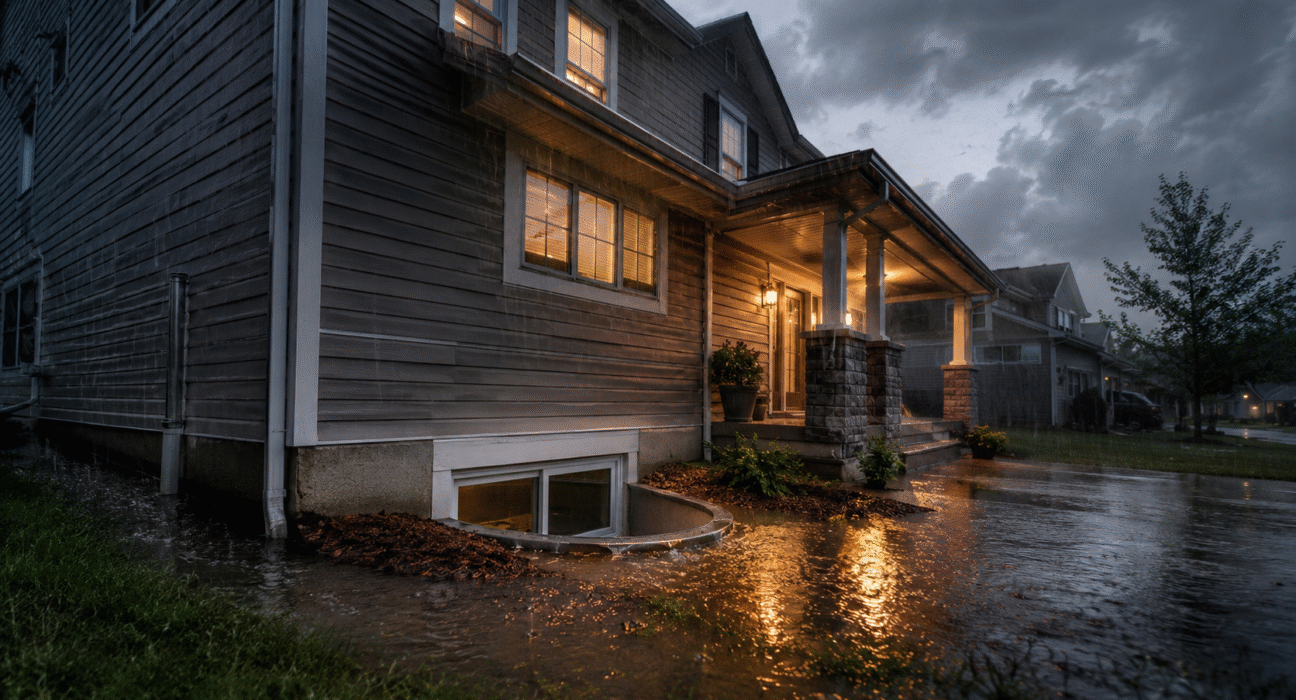
A sewer backup after rain is one of the most common plumbing issue homeowners face. The good news: most of the causes are preventable with the right hardware and a couple of inspection habits.
What to Do in the Next 10 Minutes
If sewage is actively backing up into your home right now:
1- Stop using all water:
No flushing, no faucets, no laundry, no dishwashers. Every gallon you send down the line makes the backup worse.
2- Evacuate the area:
Wastewater carries bacteria, viruses, and parasites. Get pets and kids out of the affected room.
3- Don’t enter standing sewage water if anything electrical is plugged in:
Cut power to the affected area at the breaker first if you safely can.
Why Sewer Lines Back Up After Heavy Rain
Most homes connect to a municipal sewer system through a single lateral line part of the basic plumbing setup every homeowner should know that runs from your house to a main beneath the street. When that system can’t move water fast enough or your lateral has its own issue sewage backs up the path of least resistance, which is often your basement floor drain or a low first-floor fixture.
Rain causes backups in five main ways:
1. The Municipal System Is Overwhelmed
In cities with combined sewer systems (older neighborhoods especially), storm water and sanitary sewage share the same pipes. A heavy storm puts more water into the system than it can carry. The system “surcharges” — pressure builds, and the easiest release valve is the lowest connection point, which might be your basement.
You’ll know this is the cause if multiple homes in your neighborhood are affected at the same time. There’s nothing wrong with your house the city system is overloaded.
2. Groundwater Infiltration Through Your Lateral
Even in cities with separate storm and sanitary sewers, heavy rain raises the groundwater table. Cracks in your sewer lateral (typical in any line over 30-40 years old) let groundwater seep in. Now your line is carrying both household waste and infiltrated groundwater. If the volume exceeds what the line can move downstream, it backs up.
Signs: a backup that only happens after sustained rain (not just brief storms), and gurgling sounds from drains during normal use.
3. A Sewer Cleanout Cap That’s Missing or Broken
The sewer cleanout is the access point where a plumber inserts a camera or snake into your lateral. It’s typically a 3-4 inch capped pipe in your basement or yard. If the cap is missing, cracked, or loose, ground water and storm runoff pour directly into your sewer line, instantly overwhelming it.
Walk your property after the next storm and find your cleanout. If the cap looks compromised or there’s water bubbling around it during/after rain, replace it. A new cap is $5-15.
4. Tree Root Intrusion
Roots find sewer lines because the lines leak just enough moisture and nutrients to attract them. Once roots enter through a joint or crack, they grow inside the pipe, forming a mesh that catches waste and slows flow. In dry weather, you might not notice. After a storm dumps extra water into the line, the partially-blocked section can’t handle it — and backup begins.
A camera inspection confirms root intrusion. Hydro-jetting clears it temporarily; serious cases require pipe lining or spot replacement.
5. Collapsed or Bellied Lateral
Older clay or cast iron sewer lines can crack, collapse, or develop a “belly” — a low section where waste pools instead of flowing. These chronic issues are tolerable in normal use but fail under storm-volume flow. The first time you’ll know is when you have a backup.
How to Tell If the Issue Is Yours or the City’s
| Sign | Likely Yours | Likely City’s |
|---|---|---|
| Only your home is affected | ✓ | |
| Multiple homes/neighbors affected | ✓ | |
| Backup only at lowest drain | ✓ | ✓ |
| Backup at multiple drains simultaneously | ✓ | ✓ |
| Backup correlates with neighbor’s water use | ✓ | |
| Sewer odor outside (manhole) before backup | ✓ | |
| Recurring backups during normal weather | ✓ | |
| Backup only during storms | ✓ or ✓ |
If it’s the city’s responsibility, document and report immediately — some municipalities will reimburse cleanup costs for verifiable system failures.
Warning Signs Before a Backup
A sewer line rarely fails without warning. Catch these signs early and you can avoid the actual flood:
- Gurgling sounds from drains when other fixtures are running.
- A toilet that bubbles when the washing machine drains.
- Slow drains in multiple fixtures, not just one.
- Sewer smell outside near the cleanout or manhole.
- Water around the floor drain after running the dishwasher or shower.
- A patch of grass over the lateral that’s unusually green or sunken.
If any of these are happening, schedule a sewer camera inspection now. Don’t wait for the next storm.
How to Prevent Sewer Backups
A working backflow preventer (also called a backwater valve) installed on your main sewer line is the single most effective protection against rain-induced backups. It’s a one-way valve: wastewater flows out of your house, but when pressure reverses (during a city surcharge), the valve closes and stops anything from coming back in.
Two installation locations:
- In-line, exterior: Installed in the yard between your house and the city main. Requires excavation.
- In-floor, interior: Installed in your basement floor near the main drain. Requires concrete cutting but no yard digging.
For older homes in low-lying areas, this is one of the highest-ROI plumbing investments you can make. A single basement backup easily costs $10,000+ in cleanup, drywall replacement, and lost belongings.
Other Preventive Steps
- Replace or secure your sewer cleanout cap. $15 fix that prevents storm runoff from entering your line.
- Get a camera inspection every 3-5 years, especially if you have mature trees within 20 feet of the lateral. $200-400.
- Hydro-jet your line annually if you have known root intrusion. $300-600.
- Don’t pour grease, “flushable” wipes, or hygiene products down drains. They build up and reduce line capacity, making storm surges worse.
- Disconnect downspouts from the sewer system if your home has illegal cross-connections (common in older homes). Reroute downspouts to a dry well or surface drainage.
- Install a sump pump pit alarm that alerts you when water levels rise unexpectedly. Early warning beats reactive mopping.
Cleanup After a Backup
If you’ve already had a backup, the cleanup is as important as the fix. Untreated, contaminated water leads to mold, structural damage, and health risks.
- Wear waterproof boots, gloves, and a mask before entering.
- Remove all porous materials that contacted sewage — carpet, drywall up to the water line, insulation, wood baseboards, particle board. These cannot be safely sanitized.
- Disinfect hard surfaces with a 1:10 bleach solution after physically removing all visible material.
- Dry the space aggressively with fans and dehumidifiers for at least 5 days. Moisture meters confirm dryness in framing.
- Document everything for insurance — most standard policies don’t cover sewer backup unless you’ve added a specific endorsement, but document anyway.
Frequently Asked Questions
Why does my sewer back up only when it rains?
Either the municipal sewer system is overwhelmed by storm volume, groundwater is infiltrating your lateral through cracks, or your sewer cleanout cap is letting storm runoff into the line. A camera inspection narrows it down.
Can I unclog a sewer backup myself?
A drain snake handles localized clogs in branch drains, but a true sewer line backup involving the main lateral is a job for a professional with a power auger or hydro-jetter — and a camera to confirm the cause. DIY chemical cleaners do almost nothing on sewer-main blockages.
How much does it cost to fix a sewer line backup?
Emergency snaking or jetting: $300-700. Camera inspection: $200-400. Spot repair of damaged pipe: $1,500-4,000. Full lateral replacement: $5,000-15,000 depending on length, depth, and trenching access. Pipe lining (trenchless): $80-250 per linear foot.
Will homeowners insurance cover a sewer backup?
Standard policies usually don’t — you need a sewer/water backup endorsement added. Coverage typically ranges from $5,000 to $25,000. If you don’t have this endorsement, you’ll pay out of pocket. Add it now if you live in a flood-prone area.
What is a backflow preventer and do I need one?
A backflow preventer (backwater valve) is a one-way valve installed on your main sewer line that closes when pressure reverses, blocking sewage from backing up into your home. If you’ve had even one backup, or you live in a low area with combined sewer systems, it’s one of the best preventive investments you can make.
How do I find my sewer cleanout?
Look for a 3-4 inch capped pipe sticking out of the ground in your front or side yard between your house and the street, or in your basement near where the main drain exits the foundation. If you can’t find one, you may not have an external cleanout —that’s worth installing for around $300-600 to give plumbers access.
Final Word
A sewer backup after rain is one of those problems where prevention is dramatically cheaper than cleanup. A $20 cleanout cap, a $300 camera inspection, and a $2,000 backflow preventer combined cost less than a single basement restoration. If you’ve had even one backup before — or you live in a flood-prone neighborhood — don’t wait for the next storm. The cost of acting now is a fraction of the cost of acting after.