Hydro jetting is a drain cleaning method that uses a high-pressure stream of water to flush out grease, sludge, soap scum, small roots and other build-up from the inside of a pipe. When a main drain continues to plug after normal snaking, it might be one of the best options, though not the first tool for every clog.
If your kitchen sink, shower, toilet and basement drain all aren’t working at the same time, it might not be a small clog. It might be a buildup in the main drain or sewer line. Hydro jetting is useful when the pipe needs to be cleaned, not just poked open.
How Hydro Jetting Works
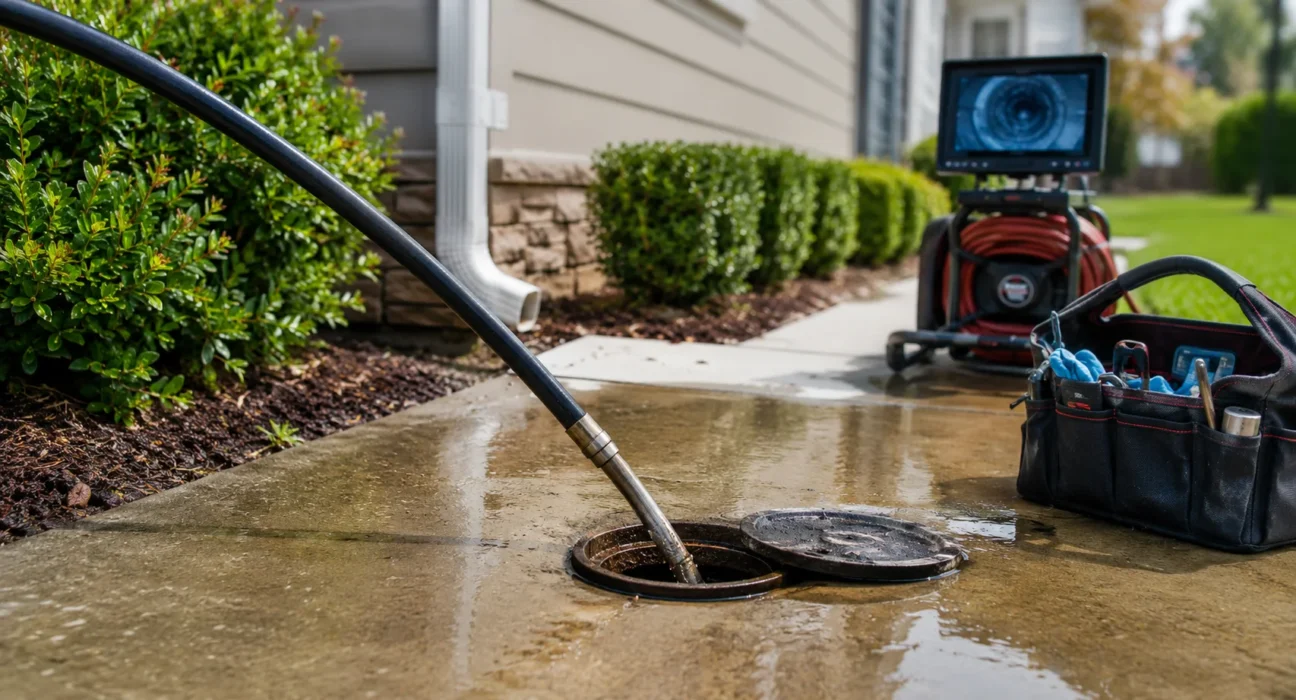
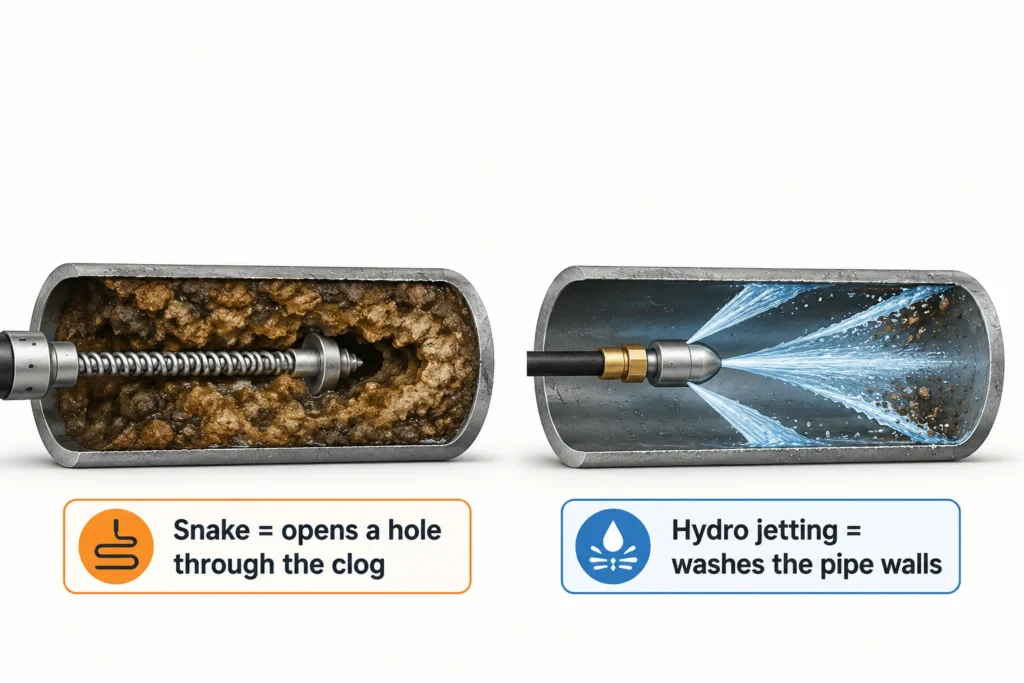
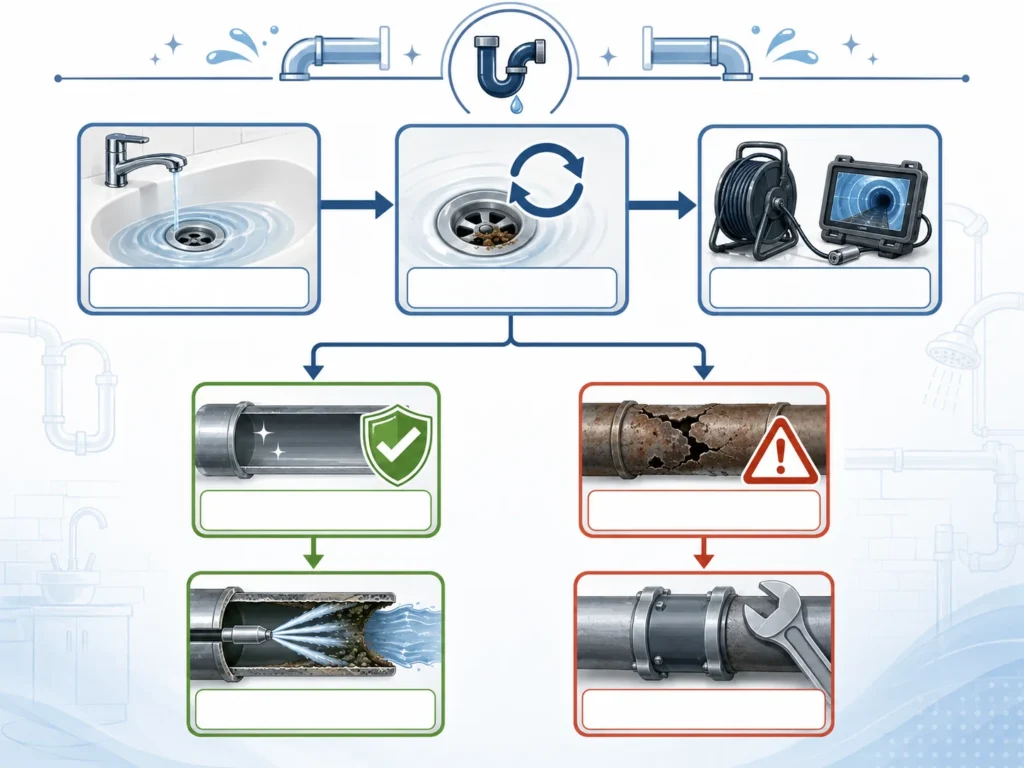
First, a plumber locates safe access to the drain line, usually through a cleanout. Then a special hose is inserted into the tube. The hose shoots water under pressure forward and backward. The forward spray helps to blast through the blockage. The spray back pulls the hose and cleans the walls of the pipe.
Imagine it as pressure washing the inside of a dirty pipe. A drain snake can work through a clog. Repeat clogs, restaurant grease and sewer lines with sticky buildup are often treated with hydro jetting because it can clean more of the interior surface.
When is Hydro Jetting Most Effective
Hydro jetting is most useful when the clog is caused by buildup, not by a broken pipe. It may help when drains clear for a few days after snaking, then slow down again.
- Grease keeps coming back in a kitchen drain. If grease is the main problem, cleaning the pipe is only half the fix. Use this kitchen sink clog prevention guide to stop grease, food scraps, and soap buildup from coming back.
- Multiple drains in the house are slow at the same time.
- The main sewer line has sludge or soft blockage.
- A camera inspection shows buildup on the pipe walls.
- Tree roots are small enough to cut and flush out, but the pipe is still intact.
- A drain has bad odors because old waste is sitting inside the line.
When Hydro Jetting Can Be Risky
Hydro jetting old or damaged pipes should not be done blindly. High pressure water can make a weak pipe problem worse if the line is cracked, collapsed, badly corroded or has many loose joints.
That’s why a camera inspection is important. The camera won’t make the clog go away, but it will show you if the pipe is safe to clean. For older homes with clay pipe, cast iron, Orangeburg pipe or unknown sewer lines, ask the plumber if they suggest a camera inspection before jetting.
Hydro Jetting vs Snaking: Which One Do You Need?
| Problem | Drain Snake | Hydro Jetting |
| One hair clog in shower | Usually enough | Usually not needed |
| Kitchen grease buildup | May open a small path | Often better if buildup is heavy |
| Main sewer line slow | May give short-term relief | Often better after camera check |
| Tree roots | May punch through roots | Can cut/flush small roots, but roots can return |
| Broken or collapsed pipe | Will not fix it | Will not fix it and may be risky |
| Goal | Open the clog | Clean the pipe walls |
Signs You May Need Hydro Jetting
You may need hydro jetting if the whole plumbing system seems tired. One slow sink is usually a local clog. Several slow drains can point to the main line.
- Water backs up in a tub when the toilet flushes.
- A basement floor drain gurgles during laundry.
- The kitchen sink smells even after cleaning the disposal.
- A plumber snakes the line, but the clog returns soon.
- You see black sludge coming up from a drain.
- The home has large trees near the sewer line.
A sewer backup after heavy rain can also point to a larger drainage problem. If this happens at your home, read the related guide on sewer backup after rain and compare the symptoms before choosing a service. When slow drains get worse after storms, the issue may be bigger than normal buildup. This guide on why sewer backups happen after heavy rain can help you compare the warning signs before paying for drain cleaning.
Can You Hydro Jet a Drain Yourself?
Hydro jetting equipment can damage pipes, spray contaminated water and hurt people if used improperly. There are small pressure-washer attachments that you can buy online but these are not the same as a professional drain jetting setup and can still cause issues if the pipe is blocked or fragile.
A safer DIY step is to record symptoms before the plumber arrives. Photograph the backups, note which drains are sluggish, and write down when the problem started and if rain makes it worse. This helps the plumber select the correct access point and tool.
FAQ Section
Is hydro jetting better than snaking?
Hydro jetting is better for heavy buildup on pipe walls. Snaking is often enough for a simple clog. The right choice depends on the pipe condition and the cause of the blockage.
Can hydro jetting damage old pipes?
Yes, it can be risky if the pipe is cracked, collapsed, badly corroded, or made from fragile older material. A camera inspection helps reduce that risk.
How often should hydro jetting be done?
Most homes do not need hydro jetting on a fixed schedule. It is usually done when repeat clogs, grease, sludge, roots, or main line buildup are confirmed.
Does hydro jetting remove tree roots permanently?
It can cut and flush small roots, but roots can grow back if they entered through cracks or loose joints. The pipe may still need repair.
Is hydro jetting safe for kitchen drains?
It can be useful for heavy grease buildup, but the plumber should confirm the pipe condition and use the right pressure and nozzle.