Summer Roof Plumbing Checklist for Middle-Class Homes
Heavy rain, humidity, clogged gutters, and roof leaks all at the same time can take a toll on a home in the summer. Many homeowners don’t consider plumbing problems on their roof until they spot water stains on their ceiling, gutters overflowing during a storm, or rainwater beginning to collect near their foundation.
That’s why a simple checklist of summer roof plumbing for middle-class homes can help you spot small problems before they turn into costly repairs. For a broader seasonal maintenance guide, you can also review these summer plumbing tips to help protect your drains, pipes, outdoor faucets, and home plumbing system during hot weather.
What is roof plumbing?
Roof plumbing is the term for the parts of your home that carry rainwater away from the roof or allow plumbing pipes to pass through the roof safely.
For most middle-class homes this means the following:
- Rain gutters
- Drains
- Roof drains, especially on flat or low-slope roofs.
- Plumbing vent piping
- Rubber boots on vent
- Flashing of roof openings
- Attic spaces below penetrations of roof pipe
- Drainage around foundation
These parts might not seem connected at first, but they all work together to stop water from getting into your home. If one thing goes wrong, water can end up in the attic, behind walls, around the foundation, or in the basement or crawlspace.
For example, a clogged gutter could cause rainwater to spill over the edge of the roof. A downspout that is too short will dump water right next to the foundation. A cracked rubber boot around a plumbing vent pipe can allow rain to leak into the attic. These are small problems at first, but can become expensive if not taken care of.
Plumbing Checklist for Summer Roof
| Area to Check | What to Look For | Why It Matters | DIY or Pro? |
|---|---|---|---|
| Gutters | Leaves, dirt, sagging, overflow | Prevents water from damaging fascia, siding, and foundation | DIY if safe |
| Downspouts | Clogs, loose joints, short discharge | Moves roof water away from the home | DIY |
| Plumbing vent pipes | Cracked rubber boot, loose seal, stains below pipe | Helps prevent attic leaks around roof openings | Usually pro |
| Flashing | Rust, gaps, loose metal, lifted edges | Stops water from entering around roof penetrations | Pro |
| Attic | Damp insulation, dark stains, musty smell | Helps catch hidden roof leaks early | DIY inspection if safe |
| Foundation area | Pooling water after rain | Helps prevent basement or crawlspace moisture | DIY |
| Tree branches | Leaves, debris, branches touching roof | Reduces gutter clogs and roof damage | DIY or pro depending on height |
| Flat roof drains | Standing water, debris around drains | Prevents roof ponding and leaks | Usually pro |
Why Summer Roof Plumbing Checks Are Important
Summer is heat and humidity, sudden storms, and heavy rain. That combo can find weak spots in your roof drainage system.
In hot months, the rubber seals around vent pipes can dry out and crack. Gutters can become clogged with leaves, shingle granules, twigs and roof debris. Downspouts get plugged or disconnected. If your home has a flat or low-slope roof section, drains can get clogged and water can sit on the roof.
Many homeowners don’t know the problem has begun until it has already caused damage. They see a brown stain on the ceiling, water dripping in the attic, paint peeling near a bathroom, or water collecting near the foundation after a rain.
That’s where a summer roof plumbing check can help. It lets you find the weak spot before the next storm makes it worse.
1. Clean Gutters Prior To Heavy Summer Rain
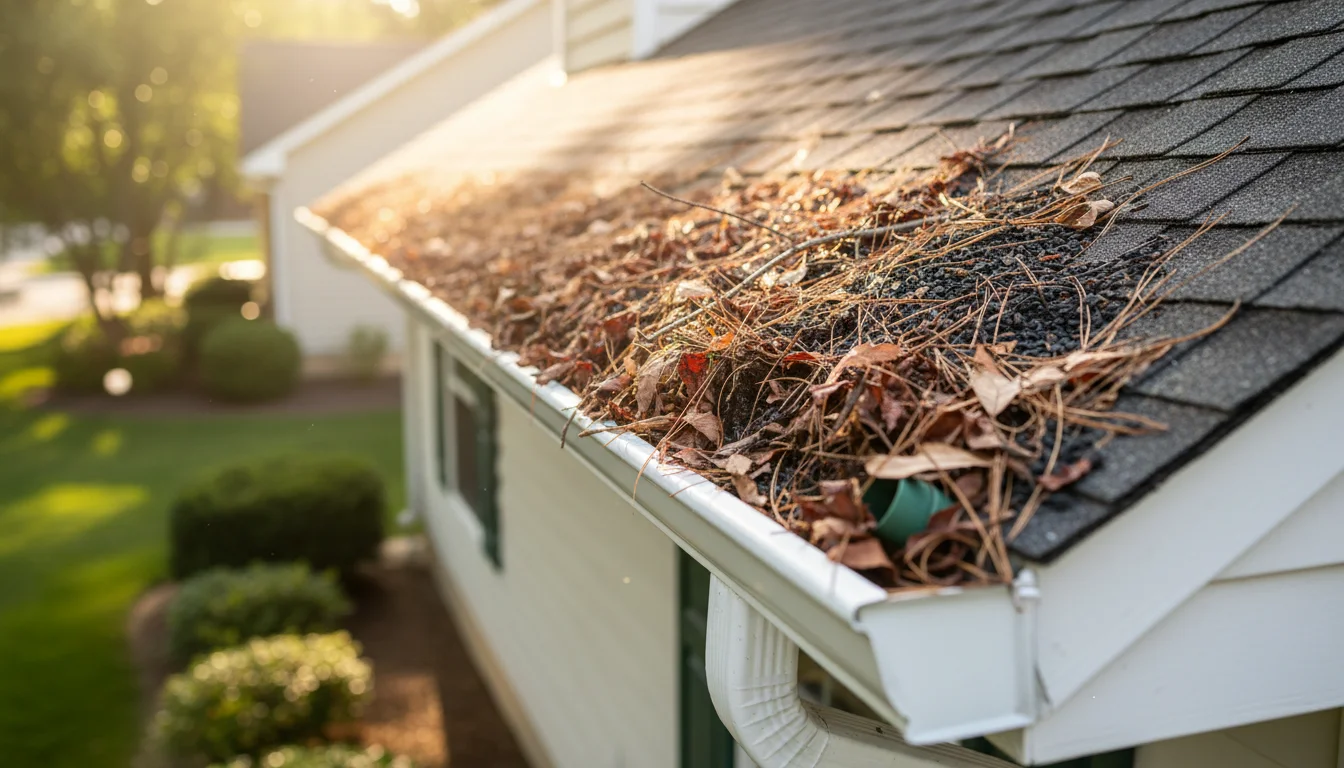
Gutters are one of the most critical components of roof water control. Their job is to catch rain water from the roof and move it into downspouts. If the gutters are clogged, the water has nowhere to go.
The water could go over the gutter edge and not away from the house. It can damage fascia boards, soffits, siding, landscaping and even the soil around your foundation.
Signs your gutters need help include:
- Water running over the edge in the rain
- Inside the gutter, plants or weeds.
- Sections that sag
- Dark streaks on the siding below gutters
- Water pooling around the house
- Soil or mulch washing away from the foundation
- Gutters separating from roofline
If your house is one story and the gutters are easy to get to safely, you might be able to clean them yourself, using gloves, a gutter scoop and a garden hose. If the roof is steep, the house is two stories, or the gutters are hard to get to, you’re better off paying someone.
Don’t walk on a wet roof. Don’t over lean on a ladder. A little gutter job isn’t worth a serious fall.
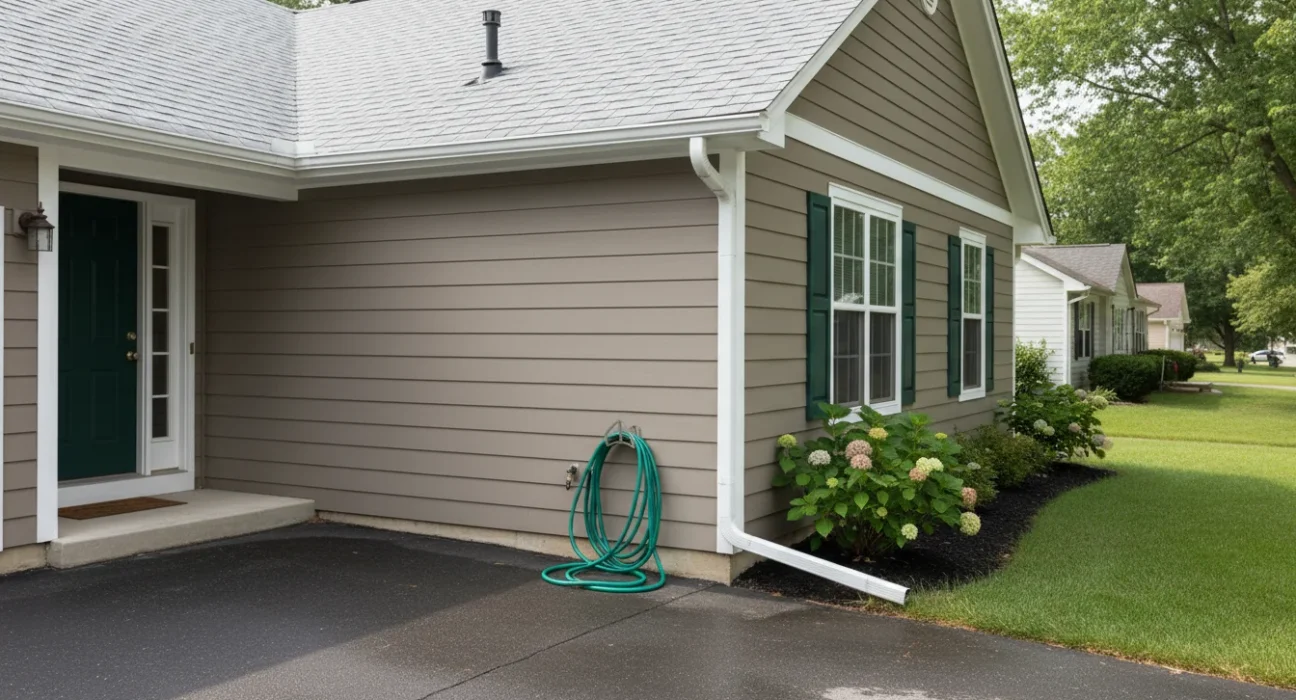
2. Test downspouts using garden hose
Cleaning the gutter is half the battle. Downspouts need to drain properly, too.
Gutters can appear clean, but if the downspout is blocked, water will still back up and overflow. Often this is caused by leaves, pine needles, roof granules or small pieces of debris collecting around the opening of the downspout.
To check a downspout, run water down the gutter with a garden hose and observe how it drains out. Water needs to move fast and drain away from the home.
Watch for these problems:
- Water slowly trickling from the downspout
- Water pours into the gutter
- Downspout joints leaking water
- Downspout sections falling apart
- Water dumping right next to foundation.
- Drain lines backing up underground
Add a downspout extension or splash block if the downspout empties too close to the house. The idea is to not move water right next to the foundation, but away from it.”
One of the cheapest ways to reduce foundation moisture problems in many homes is a simple downspout extension.
3. Check where downspouts empty
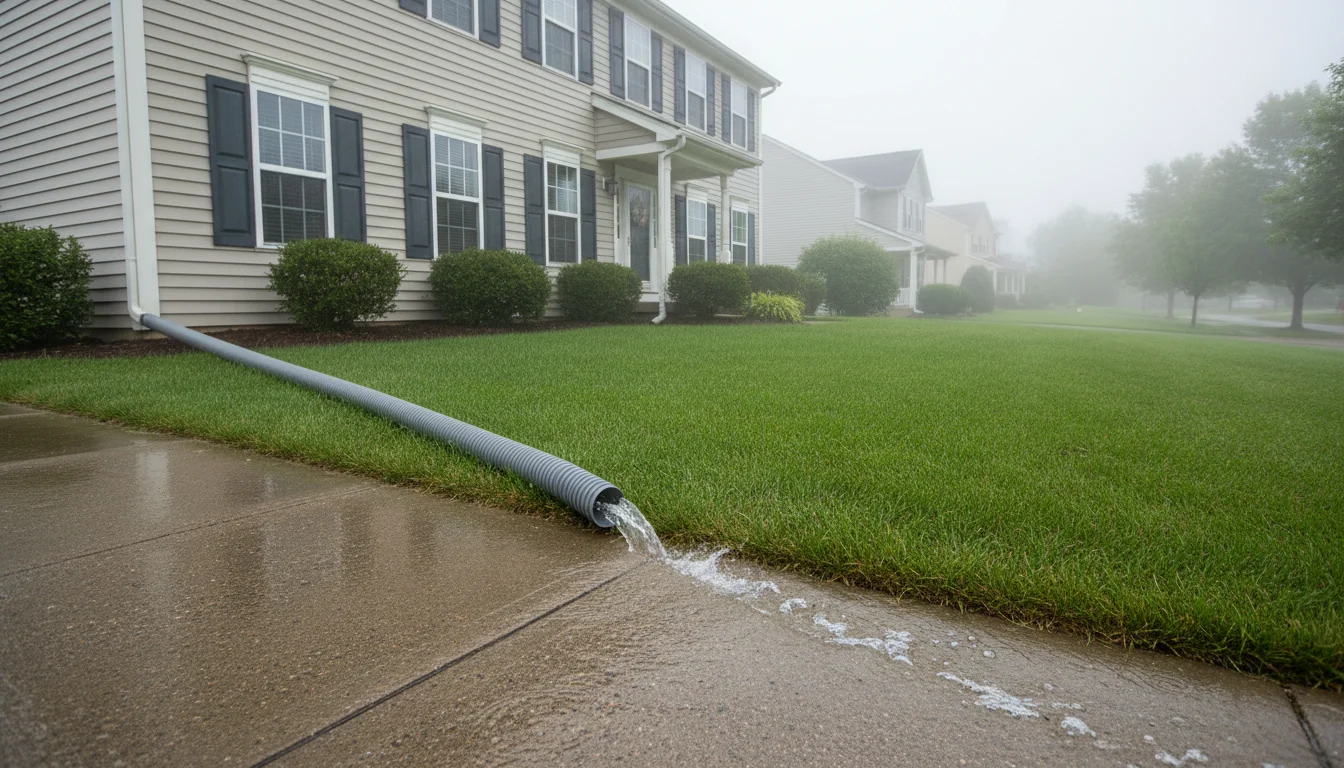
A downspout that drains in the wrong place can be just as bad as a clogged gutter.
Take a walk around your house after a heavy rain and see where the water goes. If water is pooling at the foundation, near basement windows, around crawlspace vents, or in a low spot in the yard, you need to address drainage.
Some warning signs include:
- Muddy ground near the house
- standing water next to the foundation
- Wet basement walls.
- Smell of a musty basement or crawl space
- Take mulch from one place
- Soil erosion at the downspout location
- Missing or broken downspout extensions
This is important because roof water is a lot of water. Even a small roof can dump hundreds of gallons in a heavy rainfall. That water, if it continues to land near the house, can cause basement leaks, crawlspace moisture, foundation pressure, and conditions that are friendly to mold.
Not every middle-class homeowner needs a major drainage system immediately. Sometimes the fix is as simple as extending the downspout, changing the direction of the water flow, and making sure the ground slopes away from the house.
4. Check Plumbing Vent Pipes And Rubber Roof Boots
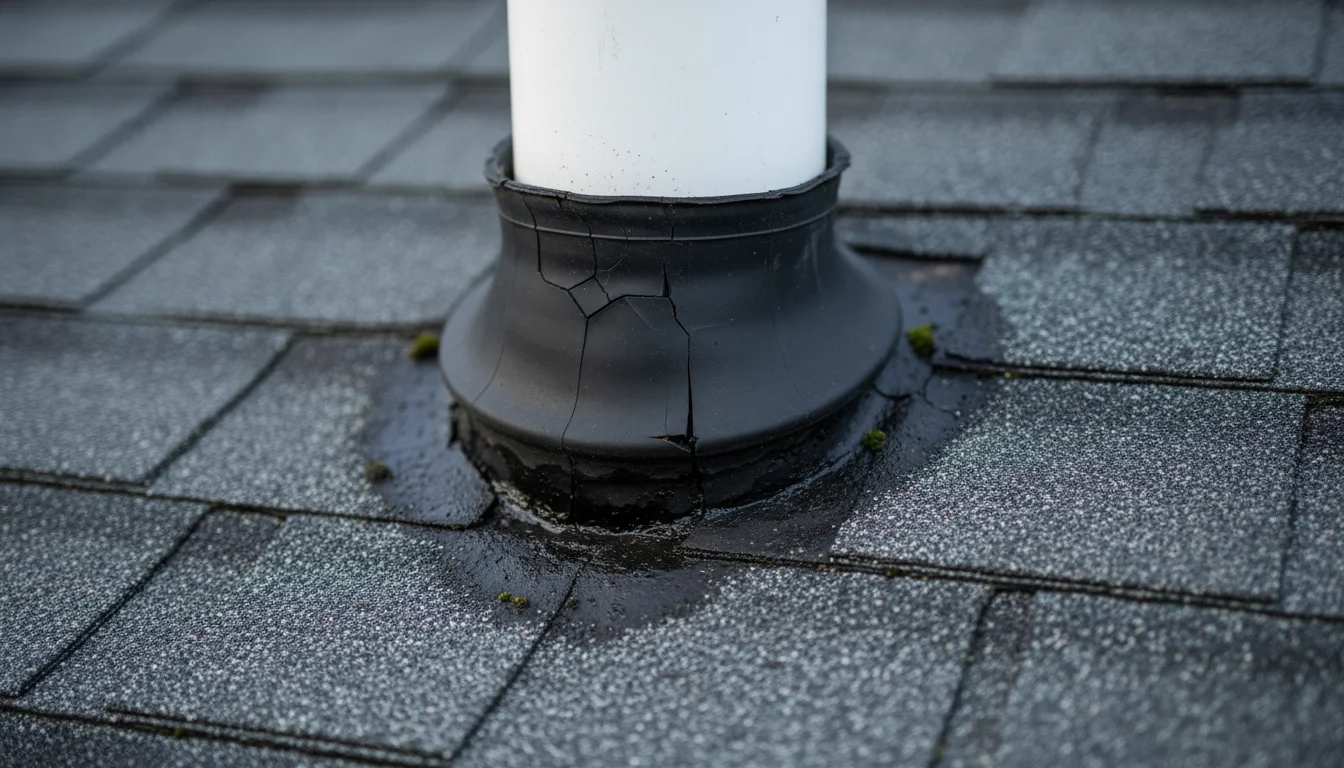
This is one of the most important parts of roof plumbing, and one of the most misunderstood. That pipe coming out of your roof might be a plumbing vent pipe. This pipe lets air into your plumbing system so drains can work correctly and sewer gases can vent outside instead of inside your home. If the vent pipe itself becomes clogged, it can also cause slow drains, gurgling sounds, and sewer odors inside the home. You can read more about those signs in this guide to a blocked plumbing vent pipe. Where that pipe comes through the roof, there is usually a rubber boot or flashing seal. The rubber can crack or pull away over the years from the summer heat, sun, age and weather. When the boot fails, rainwater can seep in around the pipe and run down into the attic. From inside the house it might look like a plumbing leak since the water is near a pipe. But the real problem is often the roof seal around the pipe.
How to tell if you have a plumbing vent boot leak:
- Rain ceiling stain
- Wet insulation around pipe in attic
- Water flowing down the outside of a PVC pipe .
- Dark stain on roof decking near a vent pipe
- hot smell in the attic
- Bubbling paint on a bathroom or hallway ceiling
- Leak only during or after rain
A cracked vent boot is a roofing repair, not a plumbing repair. The pipe is probably fine. The weak link is normally the rubber or flashing around it. Scan it with binoculars for cracked rubber, gaps or lifted flashing if you can see the vent pipe from the ground. Only get on the roof if you can do it safely. For most people, replacing a vent boot is a job for a roofer.
5. Check for Attic Stains After Rain
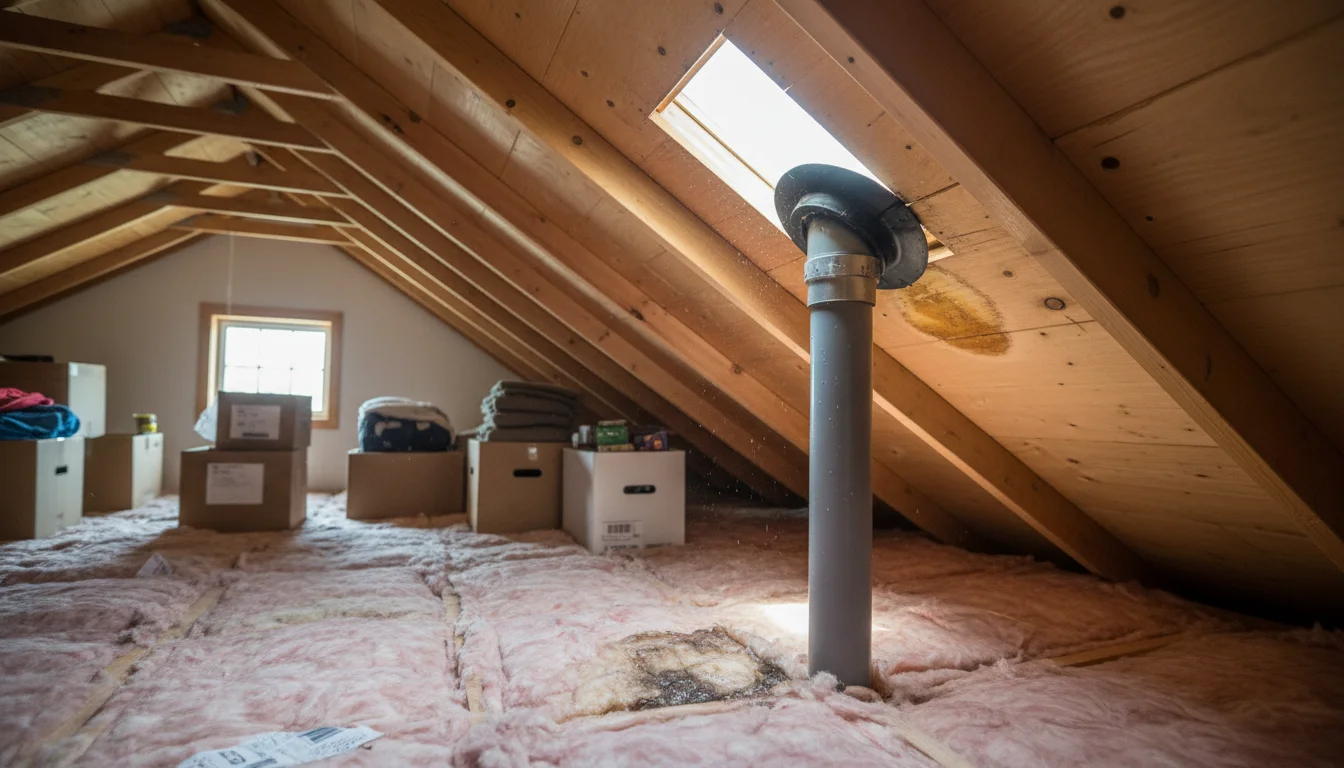
The attic can show roof plumbing problems before they show up inside your living space.
If safe and accessible, check the attic after a heavy rain. Bring a flashlight and check places where pipes, vents or openings in the roof go through.
Search for:
- Moist insulation
- Dark spots on wood
- Water trickles down a pipe
- Rusty nails
- Musty odor
- Spot like a mould
- Sunlight coming through small gaps in the roof
- Water stains around roof vents
A ceiling stain isn’t always directly above the leak. Water can travel along rafters, pipes, insulation or drywall before it shows itself. That’s why attic inspection is helpful.
If you see wet insulation, don’t ignore it. Wet insulation can trap moisture and conceal damage. Even if the active leak is reduced, moisture trapped in the ceiling can still cause odor, mold growth, and ceiling damage.
6. Leaking roof or condensation?
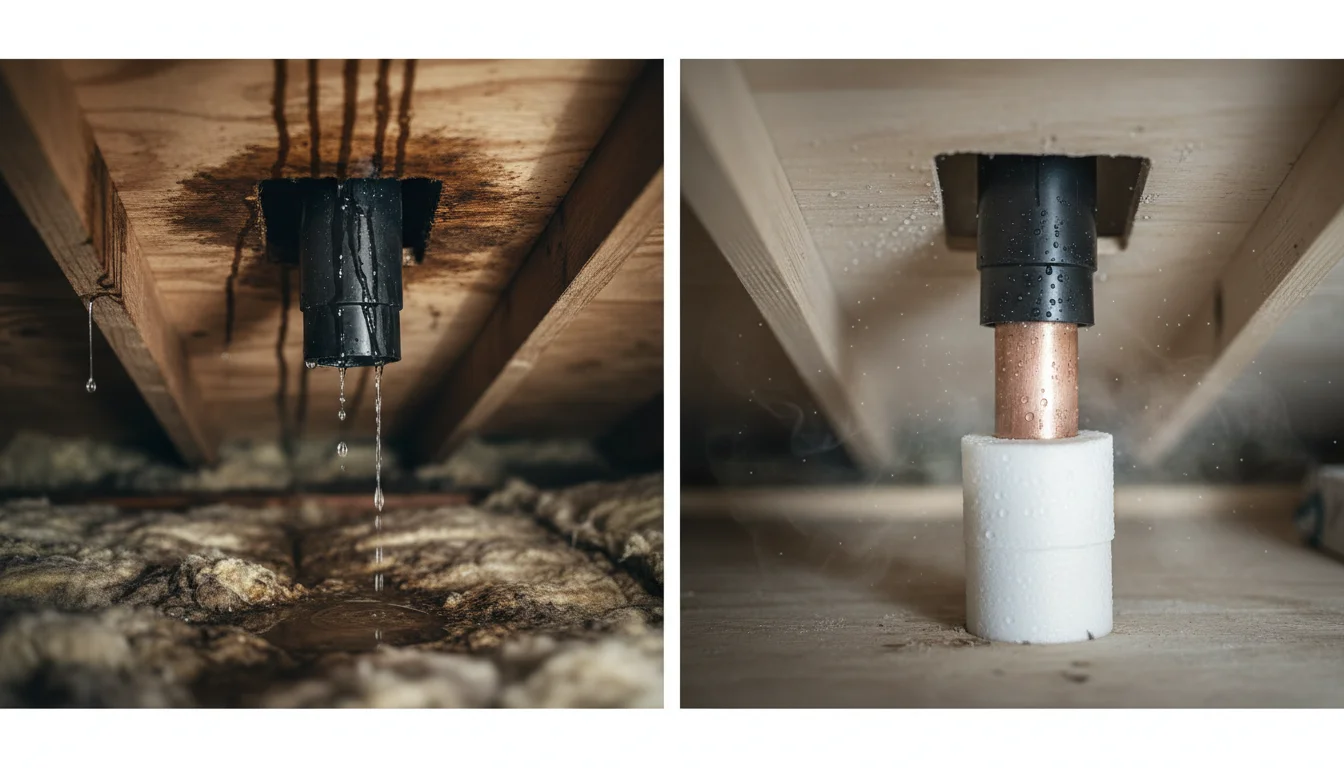
Homeowners often mistake condensation for a roof leak, especially when moisture shows up near a pipe in the attic. Before assuming the roof is leaking, it helps to understand why pipes sweat in summer, because condensation can sometimes look like a small plumbing or roof leak.
| Sign | More Likely Roof Leak | More Likely Condensation |
|---|---|---|
| Happens during or after rain | Yes | Usually no |
| Water runs down outside of roof vent pipe | Yes | Sometimes |
| Moisture appears during cold weather or high indoor humidity | Sometimes | Yes |
| The stain is near a roof penetration | Yes | Possible |
| Dampness appears after hot showers | Possible | Yes |
| Insulation is wet around the roof opening | Yes | Possible |
| The problem appears even when there has been no rain | Less likely | More likely |
7. Do You Need a Plumber or a Roofer?
If water is near a pipe, it is natural to think you need a plumber. But if the pipe goes through the roof and the leak appears after rain, a roofer may be the better first call.
| Problem | Who to Call |
|---|---|
| Water runs down a pipe only when it rains | Roofer first |
| Rubber boot around roof pipe is cracked | Roofer |
| Flashing around pipe, chimney, or skylight is loose | Roofer |
| The pipe itself is cracked, broken, or leaking from inside | Plumber |
| Sewer smell inside the home | Plumber |
| Drains are gurgling or slow along with vent concerns | Plumber |
| Ceiling stain near vent pipe but source is unclear | A roofer or plumber inspection may be needed |
| Both roof leak and plumbing odors are present | Possibly both |
8. Inspect Flashing Around Roof Openings
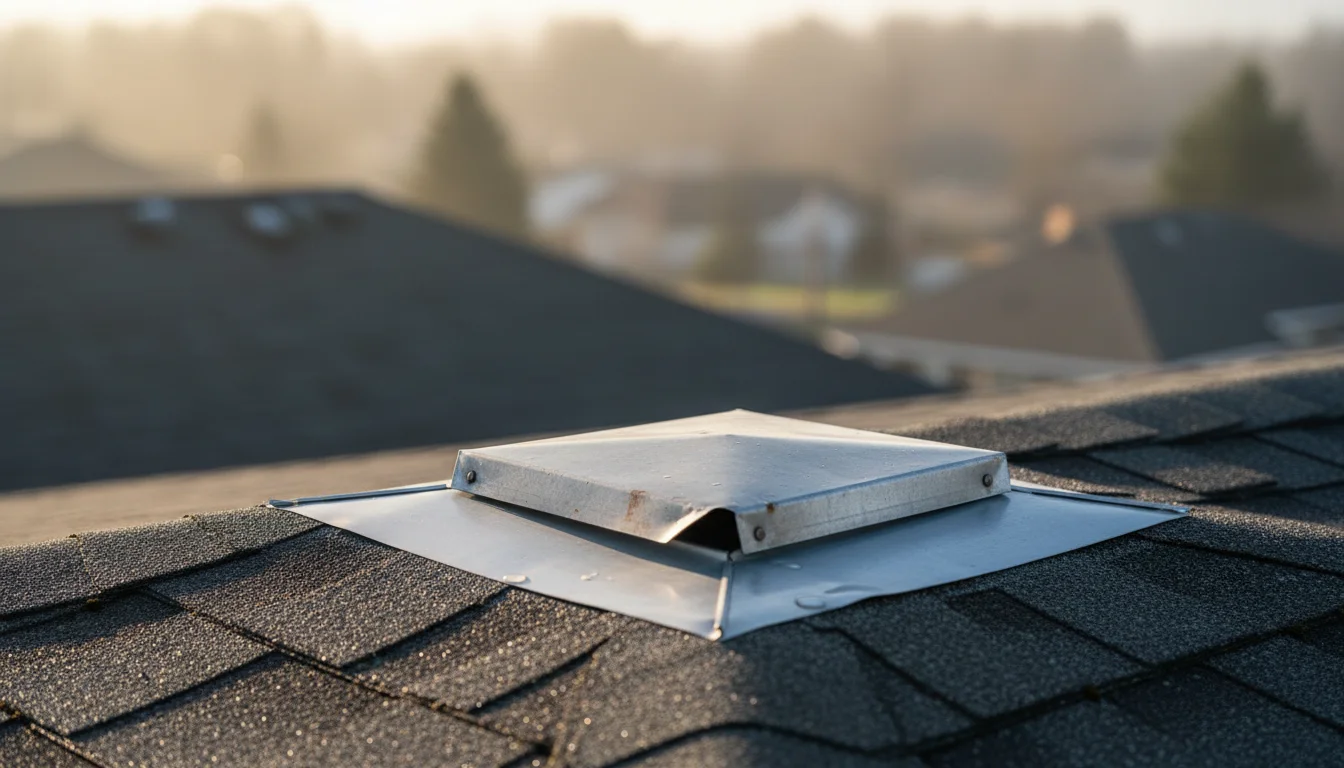
Flashing is a thin metal or waterproof material used around roof joints and openings. It prevents water from getting into the broken areas of the roof surface.
Common areas of flashing are:
- Plumbing vent piping
- Chimneys
- Skylights
- Roof – wall joints
- Exhaust vents
- Dormers
- Valley
Flashing problems can be hard to see from the ground, but there are clues to look for:
- Rusty metal.
- Raised edges
- Sealant cracked
- Shingles missing around an opening
- Water stains inside underneath the area
- Loose or broken vent covers
Most flashing repairs should be done by a professional. Just slapping caulk on willy-nilly may buy you some time on a leak, but it generally won’t solve the problem. Sometimes excess sealant can even trap water or complicate a proper repair later.
9. Clean Gutters Don’t Overflow
Even a homeowner who has cleaned his gutters is still going to see water spilling over the edge during heavy rain. This can be frustrating because it seems like the problem should have already been worked out.
If the clean gutters overflow anyway, the reasons may be:
- Slope of gutter incorrect
- Downspouts are too small
- There aren’t enough downspouts
- The top of the downspout is blocked.
- The roof valley is dumping too much water in one location
- Separation of gutter from fascia
- Clogged underground downspout drains
- Gutters are too small for the roof area
Which is why testing the system with water is helpful. Not just look in the gutter. Watch water move through the whole path: roof edge, gutter, downspout, discharge area, and ground drainage.
If overflow occurs only during very heavy storms, the system may be undersized or poorly located. If during normal rain there is overflow then there may be a clog, a slope problem, or a blocked outlet.
10. Inspect Basement Downspout Drains
Some houses have downspouts that go down into underground drain pipes. These systems can work well when they’re clear but they can also clog, crack, collapse or back up over time.
Signs of underground downspout drain issues include the following:
- water backing up from the drain hole
- Downspout overflow at connection
- damp ground by the buried drain line
- water collecting close to the foundation
- Moisture in the basement after heavy rain
- No water coming out anywhere visible
Try to inspect the visible discharge point, if there is one, if you don’t know where the underground drain goes. Some drains discharge at the curb or into a dry well or farther out in the yard. Depending on the setup, you may need a drainage contractor, gutter company or plumber with drain cleaning equipment if the line is blocked.
First, and this is inexpensive, make sure the aboveground connection for the downspout is clear and not clogged with leaves or roof debris.
11. Flat or low-slope roof? Roof Drains, Check

Not all homes have a steeply pitched roof. A few homes have flat or low-slope sections over porches, garages, additions or contemporary rooflines.
These areas can rely on roof drains or scuppers to remove water. If those drains get clogged, water can pool on the roof. “Standing water is not something to overlook.
Warning signs are:
- Rain continued to stand on the roof long after it stopped
- Debris surrounding a drain
- Stains on ceiling below flat roof area
- Drip near exterior walls
- Soft areas or bubbling on the roof surface
- Marks on outside walls from overflow
Drainage problems on a flat roof should normally be investigated by a professional, as the roof surface, drain connection and waterproofing membrane all need to work together.
12. Prune the branches near the roof
Tree branches can cause problems with roof plumbing indirectly. They fall into gutters, rub on shingles, damage roof surfaces, and add to the debris around drains and valleys.
You don’t have to cut every tree down in your neighborhood, but branches shouldn’t scratch the roof or hang heavily over gutters.
Pruning branches has the following benefits:
- less clogged gutters
- Less roof debris.
- More resistant to storms, less branch breakage
- Better airflow on the roof
- Easier inspection of roof and gutters
Hire a professional tree service if the branches are high, near power lines, or large enough to damage the home. Most homeowners shouldn’t attempt this on their own.
13. Affordable Tools for Summer Roof Plumbing Checks
A basic summer check doesn’t require fancy equipment. Most homeowners can get started with simple tools.
Useful things are:
- Work gloves
- Light Source: Flash
- Hose (garden)
- Binoculars
- Scoop out the gutter
- Bucket.
- Extension of downspout
- Splash block
- Ladder support
- Emergency leak protection small tarp
- Camera phone for pictures of stains or damage
Binoculars are especially useful because they allow you to inspect roof details from the ground. Climbing might not be needed to find a cracked vent boot, a loose gutter or damaged flashing.
Photograph anything suspicious. If you call a plumber or roofer later on photos can be helpful to clearly explain the problem.
14. What Homeowners Can Do Safely on Their Own
Many summer roof plumbing checks are inexpensive and simple. The trick is to know when the DIY is a good idea and when it becomes unsafe.
Homeowners can typically manage the following:
- Gutter inspection at ground level
- Cleaning gutters that can be reached safely with a ladder
- Testing downspouts with garden hose
- Extensions for downspouts
- Looking around the attic with a flashlight
- Looking for stains after a rain
- Where does water flow around the foundation
- Clearing small debris from ground-level drainage areas,
- Visible Damage Photography
These tasks will enable early low-cost detection of problems.
15. When to See a Professional
Some problems are not worth a guess. Call a professional if you notice:
- Water dripping vigorously in the attic.
- Stains on ceiling grow after rain
- Vented boot cracked rubber
- Loose or damaged flashing
- gutters peeled off the house
- Water entry into the basement or crawlspace
- Ponding water on flat roof
- Sewage smell in the house
- vent problems with gurgling drains
- Wet insulation or musty smell in the attic
- Any roof area that requires dangerous climbing
Hiring a professional may seem like an expense, but it may be far cheaper than having to repair mold, drywall, framing, insulation or foundation damage later.
16. Patches Aren’t Permanent Solutions
Many homeowners look for a quick fix when rain is coming. Makes sense. An attic bucket, tarp or temporary sealant can minimize the damage for now, but these are not permanent fixes.
Be careful with temporary fixes like the following:
- Random. Caulk around flashing.
- Roof leak tape
- Roof cement applied not knowing the source
- Capping a vent opening incorrectly
- The plumbing vent pipe is blocked
A plumbing vent pipe should not be sealed closed. It needs to stay open so the plumbing system can breathe properly.
Temporary protection is only meant to reduce damage until the real issue is repaired. If you are seeing water coming in around a roof pipe the proper fix might be to replace the boot, fix the flashing, or repair the roof seal.
17. Errors to avoid
Simple mistakes can exacerbate roof plumbing problems.
Avoid doing these:
Ignoring some minor stains on ceiling:
A small stain may mean the roof or attic is already leaking. Waiting makes it worse.
Assuming each pipe leak is a plumbing leak:
If you find water around a pipe after a rain, the problem could be the roof boot or flashing.
Downspouts drain beside the foundation:
This directs roof water exactly where you don’t want it.
Cleaning gutters, but not downspouts:
The system only works if the water can get out properly.
Shingle pressure washing:
High pressure can damage roofing materials and push water where it isn’t supposed to go.
Caulk for the main repair:
Caulking can be a temporary fix, but it doesn’t often fix flashing or boot failures.
18. How Often Should You Inspect Roof Plumbing?
For most homes, a basic roof plumbing check should be performed:
- Before the summer storm season
- After a terrible storm
- After trees shed heavy debris
- If you see ceiling stains
- If the gutters overflow
- If water collects around the foundation
- When leaving the house for an extended trip. If you are planning to travel, it is also smart to prepare your plumbing before vacation so small leaks, drain issues, or water problems do not surprise you when you return.
Final Roof Plumbing Check List
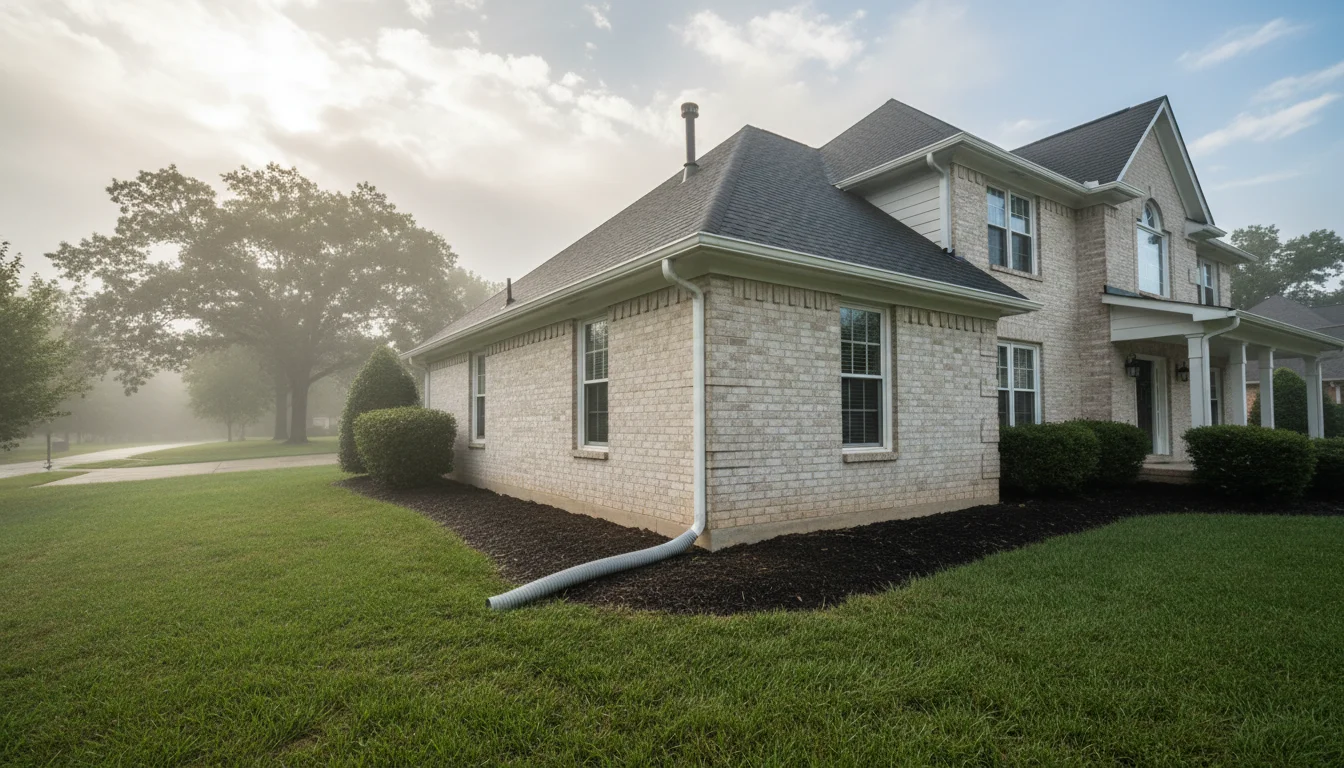
Before the next heavy rain, go through this list:
- Check gutters for leaves, dirt and sagging.
- Test downspouts with a garden hose
- Be sure that downspouts take water away from the home
- Check for water pooling at the foundation
- Inspect exposed roof vent pipes from the ground
- Inspect the rubber vent boots for any visible cracks
- Rain, look inside the attic
- Examine for wet insulation or stains
- Where possible, check flashing areas from the ground
- Clear branches off the roof
- Check for overflow in heavy rain
- Check flat-roof drains if you own a home with them
- Call a professional if there are stains, leaks or unsafe roof access
Roof maintenance and plumbing in the summer are not only worrying about the roof. It’s about protecting the whole house from water damage. Gutters, downspouts, roof vent pipes, flashing, attic insulation, and foundation drainage are all working together. Middle-class homeowners don’t want to throw money away. The idea is to catch little warning signs early, do simple maintenance safely, and know when a professional repair is worth the money.
At first it may seem like a small thing, but a clogged gutter, cracked vent boot, or downspout in the wrong location can have major consequences. But repeated summer storms can turn those minor problems into ceiling stains, attic moisture, basement water, mold, and costly repairs. Start with a simple checklist. Observe how water moves around your home. Check the attic after it rains. Identify any stains or odors or overruns. And if the issue involves roof climbing, flashing, vent boots, active leaks, or sewer smell, call the right professional before the damage spreads.
FAQS:
Why does water run down a PVC pipe in my attic when it rains?
That PVC pipe could be a plumbing vent pipe. Rainwater running down the outside of it may be a sign that the roof seal around the pipe is leaking. The rubber boot or flashing may be cracked, loose or improperly fitted.
Can Clogged Gutters Cause Water in the Basement?
Yes”. Clogged gutters can cause rain water to overflow and pool near the foundation. Over time, this can lead to basement leaks, crawlspace moisture, soil erosion and foundation water problems.
Why are my gutters overflowing even after cleaning?
Clean gutters can still overflow if the slope of the gutter is incorrect, downspouts are too small, outlets are blocked, gutters are undersized, or a roof valley directs too much water to one area. Underground downspout drains can also clog and back up.
How far from the house should downspouts extend?
Downspouts should move water away from the foundation. Exactly how far depends on your yard slope and drainage, but the goal is to keep water from collecting next to the house. Downspout extenders and splash blocks can help.
Can you inspect roof plumbing without going onto the roof?
Yes”. Most of the checks can be done from the ground, attic or from a safe ladder position. Use binoculars to inspect vent pipes, gutters, flashing from the ground. Don’t climb on steep, wet or high roofs.
Do I need a plumber or a roofer for leak around roof pipe?Should I call a plumber or roofer for a leak near a roof pipe?
If the leak happens during or after rain, call a roofer first because the problem is often the roof boot or flashing around the pipe. If there is sewer smell, gurgling drains, or a damaged plumbing pipe, call a plumber.
Are temporary roof leak fixes safe?
Temporary fixes can help reduce immediate damage, but they are not permanent. Do not block plumbing vent pipes or rely on random caulk as the final repair. A cracked vent boot or flashing problem usually needs proper repair.
How often should I do a summer roof plumbing checklist?
Most homeowners should check roof plumbing before summer storm season and again after major storms. Homes with large trees, older roofs, flat roof areas, or past water problems may need more frequent checks.