
If you have noticed a puddle near your indoor AC unit, a musty smell in your vents, or your air conditioner randomly shutting off on a 95-degree afternoon there is a good chance your AC drain line is clogged. It is one of the most common summer HVAC issues we see, and the good news is that nine times out of ten, you can fix it yourself in under 30 minutes.
What Is the AC Condensate Drain Line and Why Does It Clog?
Your central air conditioner doesn’t just cool the air, it pulls humidity out of it. As warm, moist air passes over the cold evaporator coil inside your air handler, water condenses on the coil and drips into a condensate pan underneath. From there, it flows out of your house through a PVC drain line, usually emptying near your outdoor unit, into a floor drain, or through a condensate pump.
When that happens, the condensate pan overflows. If you have a float switch installed (more on that in a minute), your AC will shut off as a safety. If you don’t, the water just keeps coming — and ends up in your ceiling, drywall, or floor.
Signs Your AC Condensate Drain Line Is Clogged
- Water pooling around the indoor air handler or furnace. This is the most obvious one.
- Water dripping from a ceiling vent or stain on the ceiling below an upstairs unit. Common when the unit is in an attic.
- AC blowing but not cooling, or shutting off on its own. A tripped float switch interrupts power to the unit.
- Musty or moldy smell from the supply vents. Stagnant water in the pan grows bacteria fast.
- Standing water in the condensate pan when you open the air handler. A clear giveaway.
- The secondary drain line is dripping. If you see water coming out of an emergency overflow pipe (often visible above a window or door from outside), the primary line is fully blocked.
What You’ll Need
- Wet/dry vacuum (shop vac)
- Roll of duct tape or a rubber adapter
- White vinegar (about a cup)
- Small funnel
- Old towels
Step 1: Turn Off the AC
Step 2: Find the Drain Line’s Exit Point
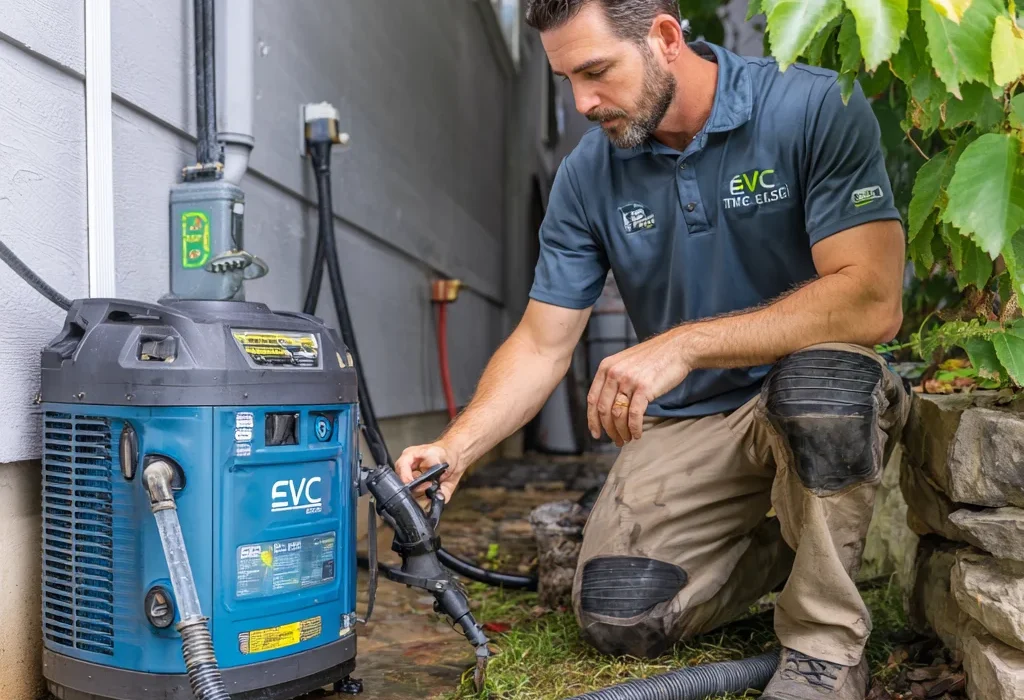
Step 3: Vacuum the Clog Out (the Right Way)
Wrap duct tape around the hose end until it fits snugly inside the PVC pipe, or use a rubber adapter (sold at any hardware store for a few dollars). Run the vacuum on wet mode for 2 to 3 minutes. You’ll hear it suddenly draw harder when the clog releases — that’s your signal. Keep going another 30 seconds, then check the vacuum’s tank. You should see dark, slimy water and chunks of biofilm.
Step 4: Flush the Line from the Access Tee
- Go to your indoor air handler and locate the drain access tee — a small T-shaped fitting on the drain line near the unit, usually with a PVC cap on top. Unscrew the cap.
- Take a flashlight and look inside. If you see standing water above the trap, the clog is below. Pour a cup of white vinegar slowly into the access tee.
- Wait 30 minutes. The acidity breaks down algae and bacteria. After waiting, head back outside and run the shop vac on the exit pipe again — this time, you should get clean flow.
- Some homeowners use a 1:1 bleach-and-water mix instead of vinegar. It’s faster but more aggressive on the PVC over time, and the fumes are unpleasant in enclosed spaces. Vinegar is gentler and works fine for routine clearing.
Step 5: Test the System
What If the Float Switch Tripped?
How to Prevent Future Clogs
A clogged AC drain line isn’t a one-time fix — without maintenance, it’ll come back next summer. Here’s what actually works
- Pour a cup of vinegar into the access tee every 1 to 3 months during cooling season. Set a reminder. This single habit prevents almost all clogs
- Drop a condensate pan tablet (biocide tablet) into the pan each spring. They dissolve slowly and inhibit algae growth all season.
- Have your HVAC system serviced annually. A technician will clean the pan, check the float switch, and inspect the trap.
- Make sure the line is properly pitched. It should slope downward at least 1/8” per foot toward the exit. Sagging or back-pitched line is a recurring clog magnet.
The article’s prevention section recommends annual HVAC servicing. Your existing spring checklist already covers seasonal plumbing prep, linking them creates a natural maintenance pair. Spring → Summer transition is exactly when readers should be scheduling this.
Frequently Asked Questions
How often should I flush my AC condensate drain line?
Pour a cup of white vinegar into the access tee every 1 to 3 months during cooling season. In hot, humid climates, monthly is safer. Skip it in winter when the AC isn’t running.
Can I use bleach instead of vinegar to clean the AC drain line?
Yes, but use a diluted 1:1 bleach-to-water mix and rinse with water afterward. Bleach is harsher on PVC fittings and the metal drain pan over time. Vinegar is gentler and works for routine maintenance.
Why does water come out of the secondary drain line on my AC?
The secondary (emergency) drain line is your warning system — if it’s dripping, your primary line is fully blocked and the pan has overflowed past its main outlet. Clear the primary line immediately to prevent water damage.
How much does it cost to have a plumber unclog an AC drain line?
Professional clearing typically costs $75 to $250 depending on access and severity. If the line needs replacement or the pan is damaged, expect $300 to $800 total.
Will a clogged AC drain line damage my air conditioner?
Not the AC itself, but a sustained overflow can damage your evaporator coil housing, rust the drain pan, ruin drywall and ceilings, and cause mold growth. The float switch protects the equipment; everything below the unit is at risk.
Can I prevent algae in my AC drain line?
Yes. Drop a condensate pan tablet (sold at any hardware store) into the pan at the start of each cooling season, and flush with vinegar monthly. These two habits prevent 90% of clogs.
What does the float switch do on my AC?
The float switch sits in or above the condensate pan and shuts off power to the AC if water rises too high. It prevents the pan from overflowing into your ceiling or floor when the drain line is clogged.