
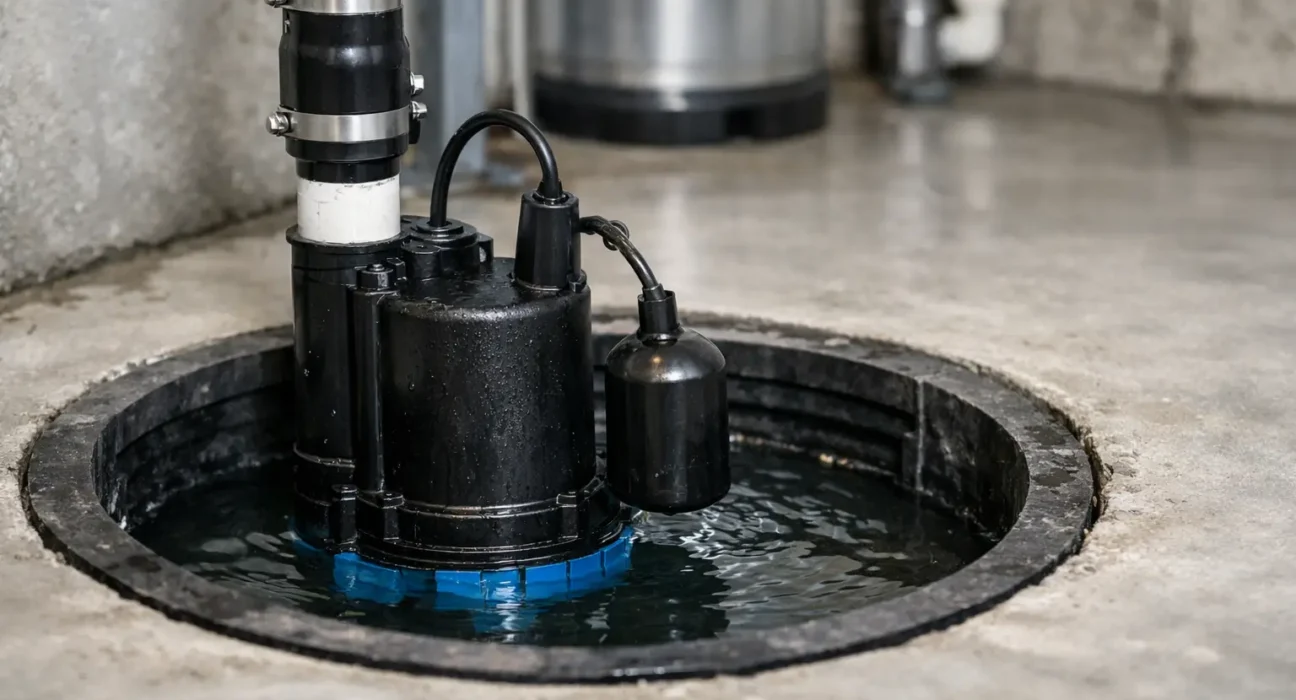
Your sump pump is your home’s first line of defense against flooding and water damage. But how do you know if it’s actually working when you need it most? In this blog, you will get information about simple tests and maintenance checks to ensure your sump pump is ready to protect your home.
A regular annual plumbing inspection checklist helps identify sump pump issues before they become expensive water damage problems.
Why Regular Sump Pump Testing Matters
Water damage from a failed sump pump can trigger insurance claims, see our plumbing leak repair cost guide to understand potential repair expenses. A sump pump that fails during heavy rainfall can lead to thousands of dollars in water damage, ruined belongings, and potential mold growth. According to home insurance data, water damage claims average between $10,000 and $15,000. Quick Visual Inspection: What to Look For
Before running any tests, perform a basic visual check of your sump pump system:
Check the power source:
Ensure the pump is plugged in and the outlet is functioning. Test the outlet with another device if needed, and verify that the circuit breaker hasn’t tripped.
Inspect the discharge pipe:
Look at the pipe that carries water away from your home. Make sure it’s not frozen (in winter), crushed, or disconnected. The pipe should extend at least 10-20 feet away from your foundation.
Examine the sump pit:
Remove the cover and look inside. Clear away any debris, dirt, or objects that could interfere with the float switch or pump operation.
Look for visible damage:
Check for cracks in the pump housing, frayed wires, or rust on metal components.
While inspecting your sump system, you may encounter general plumbing issues like water flow problems, learn how to fix low water pressure issues that often affect other parts of your home too.
The Pour Test
The pour test is the standard for checking sump pump functionality. Here is how to perform it,
Step 1: Locate your sump pump:
It is typically in your basement, crawl space, or lowest point of your home, inside a pit or basin.
Step 2: Fill a bucket with water:
Use a 5-gallon bucket for best results.
Step 3: Slowly pour water into the sump pit:
Add water until it reaches the level where the float switch should activate (usually 8-12 inches from the bottom).
Step 4: Watch the float switch:
As water rises, the float should lift and trigger the pump to turn on automatically.
Step 5: Observe the pump action:
The pump should activate within seconds, begin pumping water out through the discharge pipe, and continue until the water level drops below the float activation point.
Step 6: Listen and watch for proper shutdown:
Once the water level is low enough, the pump should shut off automatically without making unusual noises.
Testing the Float Switch Manually
The float switch is the mechanism that tells your pump when to turn on and off. To test it manually:
Lift the float switch by hand while the pump is plugged in. The pump should immediately turn on when you lift the float to the on position. Lower the float slowly, the pump should shut off when the float reaches the off position. If the pump does not respond to float movement, the switch may be stuck or malfunctioning.
Check the Check Valve
The check valve prevents water from flowing back into the sump pit after the pump shuts off. To verify it ix working, listen after the pump turns off. You should not hear water rushing back into the pit. If you do, the check valve may be installed backwards or have failed, causing your pump to work harder and potentially burn out prematurely.
Listen for Warning Signs
Even if your pump turns on, unusual sounds can indicate problems:
Gurgling or rattling noises often mean debris is caught in the impeller or the pump is struggling. Continuous running when the pit is empty suggests a stuck float switch. Loud grinding or screeching indicates bearing failure or motor problems, requiring immediate replacement. No sound at all when water is present means the pump has completely failed or lost power.
Test Your Backup System
If you have a battery backup sump pump, test it separately by disconnecting the primary pump’s power. Pour water into the pit and verify that the backup system activates. Check the battery charge indicator light, and replace batteries every 3-5 years even if they seem functional.
How Often Should You Test Your Sump Pump?
Industry experts recommend testing your sump pump every three months, with additional checks before rainy seasons. Test more frequently if you live in an area with heavy rainfall, if your basement has flooded before, or if your water table is high.
Common Problems
Stuck float switch:
Clear debris around the float and ensure it can move freely.
logged discharge line:
Disconnect and flush the pipe, or use a plumber’s snake to remove blockages.
Overwhelmed pump:
If water rises faster than the pump can remove it, you may need a higher capacity pump or a secondary backup pump.
Power issues:
Install a dedicated circuit for your sump pump to prevent overload, and consider a battery backup or water-powered backup system.
A working sump pump is essential for protecting your home from water damage. These simple tests can help to catch problems early and avoid costly repairs.
FAQS:
How do I know if my sump pump is working properly?
You can check if your sump pump is working by performing a pour test. Slowly pour water into the sump pit until the float switch activates. If the pump turns on, removes water efficiently, and shuts off automatically, it is functioning properly.
How often should I test my sump pump?
Most plumbing experts recommend testing your sump pump every three months, and always before heavy rain seasons. Homes with a history of flooding or high groundwater levels should test monthly.
What happens if a sump pump fails during heavy rain?
If a sump pump fails during heavy rainfall, water can flood your basement, damage foundations, ruin belongings, and lead to mold growth. This often results in expensive repairs and insurance claims.
What should I do if my sump pump doesn’t turn on?
First, check the power supply and circuit breaker. Then inspect the float switch for obstructions. If the pump still does not activate, the motor or switch may be defective and require professional repair or replacement.
How long should a sump pump last?
A typical sump pump lasts 7 to 10 years with proper maintenance. Pumps that run frequently or operate in high-sediment environments may need replacement sooner.
Why does my sump pump keep running even when there is no water?
This usually indicates a stuck or malfunctioning float switch. Debris inside the sump pit can prevent the float from moving freely, causing the pump to run continuously.
Do I need a backup sump pump system?
A backup sump pump is highly recommended, especially in areas prone to storms or power outages. Battery or water-powered backup systems protect your basement when the primary pump fails.
What happens if a sump pump fails during heavy rain?
If a sump pump fails during heavy rainfall, water can flood your basement, damage foundations, ruin belongings, and lead to mold growth. This often results in expensive repairs and insurance claims.