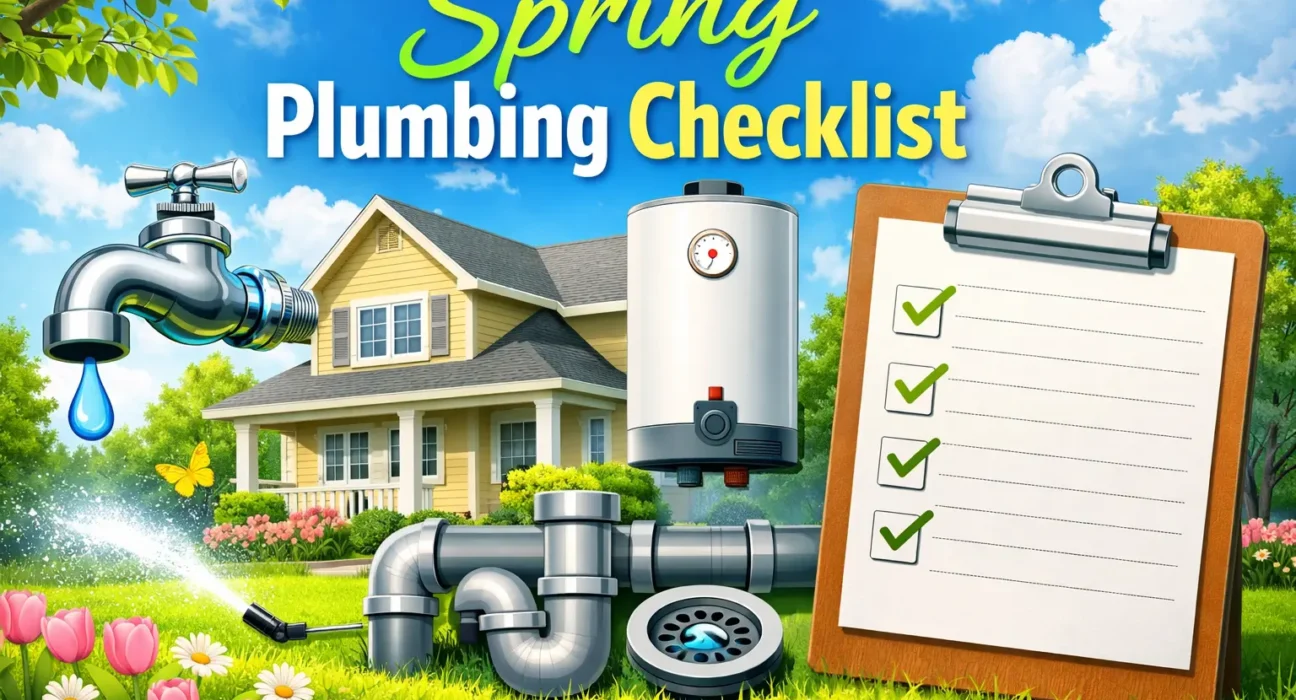
Spring Plumbing Checklist
Winter can be tough on your plumbing system in home. Freezing temperatures, increased indoor water usage, and months of wear and tear can create problems that only become apparent once the weather warms up. Spring is the perfect time to inspect your plumbing and catch small issues before they turn into expensive emergencies.
Here is the comprehensive spring plumbing checklist to ensure your system is in top shape for the months ahead.
1. Check for Leaky Faucets and Fixtures
Home owners need to turn on every faucet like kitchen, bathroom, laundry room, and outdoor spigots and look for drips, leaks, or unusual water flow. Read our blog on replacing a Faucet Cartridge.
2. Inspect Outdoor Faucets and Hose Bibbs
Outdoor faucets are particularly vulnerable to freeze damage during winter. Turn on each outdoor spigot and let the water run for a few minutes. If the flow is weak, sputtering, or if you notice leaks around the handle or pipe connections, you may have a cracked pipe inside the wall. For complete guide to repair outdoor faucet, check our blog from here.
3. Test Your Sump Pump
If you have a basement, your sump pump is your first line of defense against spring flooding. Pour a bucket of water into the sump pit and watch the pump activate. It should turn on quickly, remove the water, and shut off automatically.
4. Examine Exposed Pipes for Damage
Check exposed pipes in basements, crawl spaces, garages, and under sinks for signs of freezing damage. Look for bulging, cracks, corrosion, or frost residue. Even if pipes didn’t burst during winter, micro-cracks can develop and cause leaks once water pressure returns to normal.
5. Clear Gutters and Downspouts
While not technically part of your plumbing system, gutters and downspouts play a crucial role in directing water away from your foundation. Remove leaves, twigs, and debris that accumulated over winter.
Make sure downspouts direct water at least 5-6 feet away from your foundation. Clogged gutters can cause water to pool near your home, potentially leading to foundation cracks and basement seepage.
6. Inspect Your Water Heater
Your water heater works overtime during winter months. Check around the base of the tank for puddles, rust, or corrosion. These are warning signs that your water heater may be nearing the end of its lifespan.
Flush your water heater to remove sediment buildup that reduces efficiency and shortens the tank’s life. If you hear rumbling or popping noises when it heats water, sediment accumulation is likely the culprit.
7. Test Toilets for Hidden Leaks
Toilet leaks often go unnoticed but can waste enormous amounts of water. Add a few drops of food coloring to your toilet tank and wait 15-20 minutes without flushing. If color appears in the bowl, you have a leak—usually a worn flapper valve that’s easy and inexpensive to replace.
Also check around the base of the toilet for water or soft flooring, which could indicate a failing wax ring seal.
8. Clean Drain Lines and Check for Slow Drains
Winter months often mean more cooking, guests, and grease going down kitchen drains. Test all drains in your home by running water and watching how quickly it flows. Slow drains indicate partial clogs that will only get worse.
For preventive maintenance, pour a mixture of baking soda followed by vinegar down drains, let it sit for 30 minutes, then flush with hot water. Avoid chemical drain cleaners, which can damage pipes over time.
9. Inspect Washing Machine Hoses
Check the rubber hoses connecting your washing machine to the water supply. A burst washing machine hose can release hundreds of gallons of water and cause significant damage.
10. Look for Signs of Sewer Line Issues
Winter ground shifts and tree root growth can affect your main sewer line. Watch for warning signs like multiple slow drains throughout the house, gurgling sounds from drains or toilets, sewage odors, or water backing up when you run appliances.
A couple of hours spent on spring plumbing maintenance can save you repair cost and water damage. You will extend the life of your plumbing system, reduce water waste, and avoid these plumbing issues that no homeowner wants to face.
More Resources:
1- Basic Plumbing Knowledge For Homeowners
2- Top 15 Plumbing Problems Homeowners Face and How to Fix It