A summer water bill that doubles or triples is almost always a hidden leak most often a faulty irrigation system or a silently leaking toilet flapper, not just seasonal usage. You can confirm whether you have a leak in about 15 minutes using only your water meter, then work through the nine most-missed sources below to find it.
Here’s the context that trips people up: a typical household’s water use does rise 20–30% in summer thanks to irrigation, pools, and more frequent outdoor washing. So a modest bump is normal. But a jump of 100% or more is a different animal — that’s a leak you haven’t found yet. This guide walks the nine causes in roughly the order you should check them, starting with the cheapest and most common. Most homeowners find the problem in under an hour.
First, Confirm You Actually Have a Leak
Before you tear apart the yard, run the water meter test. It takes 90 seconds and tells you definitively whether water is moving through your system when it shouldn’t be.
- Make sure every faucet, appliance, and irrigation zone is off.
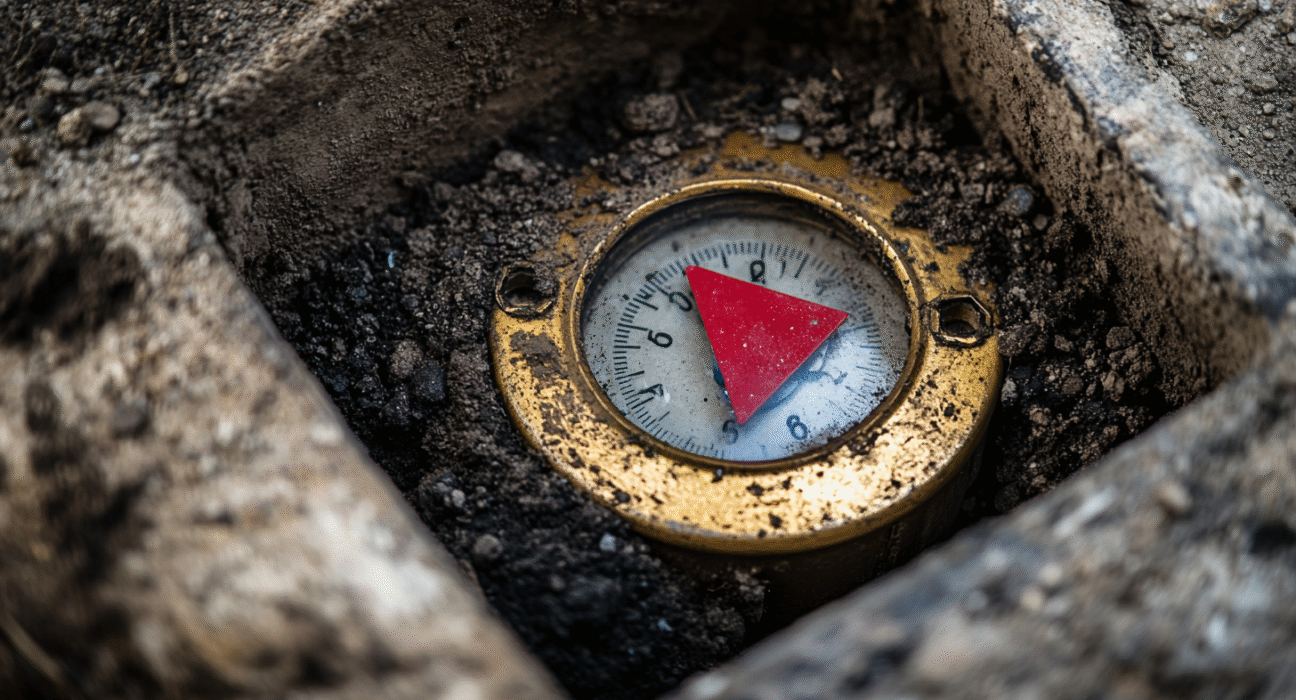
- Find your water meter — usually near the street in a covered box, or in the basement at the main shutoff.
- Note the reading, and watch the small triangle, dial, or “leak indicator” that spins when water is flowing.
- Wait 15–20 minutes without using any water anywhere in the house.
- Check the meter again.
This single test matters because the scale of hidden waste is bigger than most people expect. According to the EPA’s WaterSense program, the average household’s leaks account for nearly 10,000 gallons of wasted water every year, and roughly 10% of homes have leaks that waste 90 gallons or more per day. That’s why a bill can spike with nothing visibly wrong.
1: A Silent Toilet Flapper Leak
The single most common hidden leak in any home. The rubber flapper at the bottom of the toilet tank deteriorates over time, and when it stops sealing tightly, water trickles continuously from the tank into the bowl — usually in complete silence. You won’t hear it and you won’t see it, but a leaking flapper can waste 200 gallons a day or more.
How to test: Put a few drops of food coloring into the toilet tank (not the bowl) and wait 15 minutes without flushing. If color appears in the bowl, the flapper is leaking. A replacement flapper costs $5–10 and installs in about 10 minutes — see our step-by-step running toilet fix for the full process.
Test every toilet in the house. It’s common to have two leaking at once and never notice either one.
2: Irrigation System Leaks (the #1 Summer Culprit)
If your irrigation runs in the early morning, a leak there will never leave a puddle you’d notice during the day — by the time you walk past, the soil has absorbed everything. But broken sprinkler heads, cracked underground lines, and stuck zone valves can dump hundreds of gallons per cycle.
What to check:
- Walk every zone with the system running. Look for spraying mist (a broken head), oversaturated patches, or geysers from cracked pipes.
- Look for unusually green strips of grass — that’s where a buried line is leaking underground.
- Check the irrigation backflow preventer (above ground, usually painted) for drips.
- Confirm each zone valve is closing fully. A single stuck-open valve can run a zone 24/7.
3: A Leaking Outdoor Faucet (Especially Behind the Wall)
A dripping hose bib in plain sight is easy to find. The dangerous one is a cracked supply pipe inside the wall behind the faucet — usually caused by a freeze the previous winter that only reveals itself once summer pressure runs through the line. If you find the faucet itself is the culprit, our guide to the most common causes of a leaking outdoor faucet walks through each fix.
4: An Underground Service Line Leak
The supply line running from the city main (or your well) to your house is usually your responsibility, and a crack in it can dump water silently into the ground for months. Signs to look for:
- A wet patch in your yard between the street and the house that never fully dries, even on hot days.
- Lush green grass in a line or stripe, following the path of the buried pipe.
- A persistent dip or sinkhole forming along that path.
- The water meter spinning with everything off (once you’ve ruled out interior leaks).
- A sudden drop in pressure throughout the house.
This is not a DIY repair. Service line replacement typically runs $1,500–5,000 depending on length and trenching access but the longer you wait, the higher the bill and the more soil erosion you risk near your foundation. For how that compares with other repairs, see our breakdown of plumbing leak repair costs.
5: Pool Leaks Disguised as Evaporation
Pool owners get used to topping off all summer and chalk it up to evaporation. The rule of thumb: a typical pool loses about ¼ inch per day to evaporation in hot weather. If you’re losing more than ½ inch per day, you likely have a leak.
The bucket test: Fill a bucket with pool water and set it on the top step, partially submerged. Mark the water level inside the bucket and outside it (on the pool wall). After 24 hours, compare both. If the pool level dropped more than the bucket level, you have a leak — the bucket controls for evaporation, so any extra loss is escaping somewhere.
Common pool leak sources: skimmer cracks, return-line fittings, light niches, and the equipment pad (pumps, filters, heaters).
6: Leaking Hose Connections and Timers
Garden hoses left under pressure all summer are a quiet drain. Check:
- Hose threads at the spigot — replace the rubber washer in the hose coupling.
- Hose timers and Y-splitters — cheap plastic ones develop hairline cracks.
- Soaker hoses and drip irrigation — designed to weep, but kinks, sun damage, and aging joints cause runaway loss.
7: Water Heater Pressure Relief Valve
The T&P (temperature and pressure) relief valve on your water heater opens when pressure climbs too high, releasing water through a discharge tube aimed at a floor drain or outside. If it’s stuck open or repeatedly cycling, you’ll never see the water unless you go looking.
Walk to your water heater and find the discharge tube — a copper or plastic pipe coming off the side or top of the tank and running toward the floor. Look at where it ends. Water dripping out, recent moisture, or a hissing sound means the T&P valve is leaking. That can indicate excess pressure (a failing pressure regulator) or a worn valve. Either way, it needs attention. If the valve keeps tripping on an older tank, that can signal the unit is near the end of its life here’s when it’s worth replacing a water heater versus repairing it.
8: Slab Leaks (Hidden Under the Foundation)
Homes built on concrete slabs have plumbing buried beneath the floor, and a pinhole leak in a slab line can run for weeks before you notice. Warning signs:
- Warm spots on the floor (if the leak is on the hot-water side).
- A persistent musty smell with no obvious source.
- Cracks in flooring or baseboards.
- A water-bill spike with no visible leak above ground.
- A hissing sound from inside walls or floors.
Slab leaks require professional leak detection — acoustic listening devices and sometimes thermal imaging. Repairs range from spot access through the slab to rerouting the line through walls or attic. Costs vary widely, but $1,000–4,000 is typical. Our guide on the signs of a slab leak covers what to watch for before it gets expensive.
9: A Failed Pressure Regulator Valve (PRV)
Your home’s PRV reduces incoming municipal pressure (often 80–150 psi) down to a safe household range of about 50–70 psi. When it fails, two things can happen, and both drive up water use:
- Pressure spikes throughout the house, causing fixtures to leak more, T&P valves to trip, and appliances to fail early.
- Pressure to specific fixtures drops, so you compensate by running multiple fixtures longer.
Test it by attaching an inexpensive water pressure gauge ($10–15) to any outdoor faucet. If pressure reads above 80 psi, your PRV is either misadjusted or failing. See our guide to low water pressure and PRV problems for how to adjust or replace it.
How to Track Down Which One You Have
Use this to jump straight from symptom to likely cause:
| Symptom | Likely Cause |
|---|---|
| Meter spins with everything off, no wet spots outside | Toilet flapper (#1) or slab leak (#8) |
| Wet stripe of lush grass | Service line (#4) or irrigation line (#2) |
| Pool dropping more than ¼” per day | Pool leak (#5) |
| Water heater area is damp | T&P valve (#7) |
| Whole-house pressure feels off | PRV (#9) |
| Bill spike started in spring | Irrigation (#2) or frost-damaged outdoor faucet (#3) |
| Warm spot on the floor | Slab leak (#8) |
What If You Can’t Find Anything?
If you’ve checked all nine and found nothing, two more steps:
- Call your water utility. Many will dispatch a technician for free to verify the meter is accurate and help locate municipal-side issues.
- Hire a leak detection service. Specialists use acoustic equipment, tracer gas, and thermal imaging to find leaks invisible to a homeowner. Expect $200–500 for a full-house leak audit — often money well spent if your bill jumped by $100 or more.
Also, confirm the bill itself. Sometimes a single meter misread or an estimated bill (when the utility couldn’t access your meter) inflates one month. Compare against the prior 12 months in gallons, not dollars — rates and tier structures change.
Frequently Asked Questions
Why is my water bill so high in summer but I haven’t changed my usage?
The most likely culprits are irrigation system leaks (broken heads, cracked lines, stuck valves) and toilet flappers that fail silently. Less common but possible: an underground service line leak, a failed pool component, or a stuck water heater T&P valve. Start with the 15-minute meter test before anything else.
How can I find a hidden water leak without tearing up my yard?
Use the meter test to confirm water is moving with everything off, then work room-by-room and zone-by-zone. A pressure gauge on an outdoor spigot, food coloring in toilet tanks, and a slow walk of every irrigation zone catch the large majority of leaks without digging. For underground leaks, hire a leak detection service — they use sound and thermal imaging.
How much water can a running toilet waste?
A leaking toilet flapper can waste 200 gallons a day at the low end and over 1,000 gallons a day in severe cases. Depending on your rates, that’s roughly $40–200 added to a monthly bill from a single toilet.
Can hot weather alone cause a higher water bill?
Yes higher pool evaporation, more frequent irrigation, increased outdoor washing, and AC condensate all push summer use up. But the normal increase is around 20–30%, not 100%+. Any larger jump usually means a leak.
Does homeowners insurance cover a high water bill caused by a leak?
The water itself isn’t covered you pay for what you use. But if the leak causes structural damage to floors, walls, or foundation, that damage is often covered by your dwelling policy. Some policies also cover service line repairs through specific endorsements. Check your own policy and contact your insurer.
How do I check for an irrigation leak?
Run each zone individually for five minutes and walk it. Look for sprayed mist (a broken head), unusually wet ground, geysers, and zones that stay damp 12+ hours after running. Also confirm every zone shuts off completely when the controller signals off — a stuck valve can run a zone continuously.
What is a slab leak and how do I detect it?
A slab leak is a leak in the plumbing under your concrete foundation. Signs include warm spots on the floor, unexplained damp areas, a persistent musty smell, cracks in flooring, and meter movement with everything shut off. Detection requires specialized equipment — call a leak detection service.