Facing leaky faucets, running toilets, poor water pressure, dripping showerheads, and more such issues, these are some plumbing fixtures problems commonly occurring in every household and each time calling a plumber for plumbing fixtures repair can be a little heavy on your pocket. Plumbing fixture repair doesn’t always require professional help but knowing when to grab your wrench versus when to call an expert can save you money, time, and potential disasters. This guide breaks down how plumbing fixtures work, what you can safely fix yourself, and when professional help protects your home, budget, and plumbing system.
Understanding Your Home’s Plumbing Fixtures
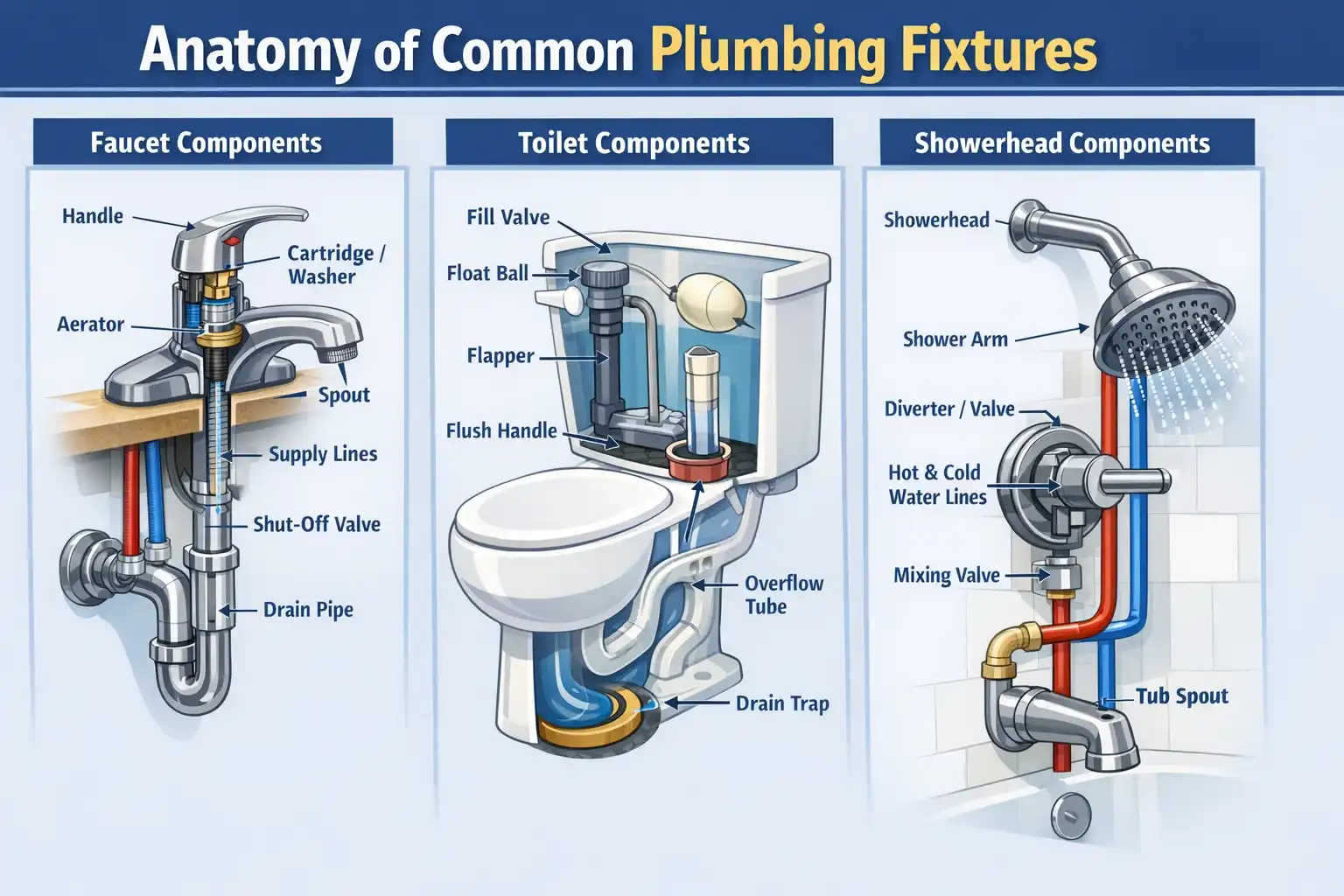
Plumbing fixtures repair starts with understanding the fixtures you rely on most. These include faucets, toilets, sinks, showers, bathtubs, and garbage disposals. Each fixture contains multiple components that can wear out, corrode, or malfunction over time.
Common household plumbing fixtures:
- Kitchen faucets and sinks
- Bathroom sinks and faucets
- Toilets
- Showerheads and tub valves
- Utility sinks and outdoor hose bibs
Fixtures fail due to worn seals, mineral buildup, corrosion, improper installation, or aging materials. Catching issues early prevents water damage and costly plumbing repair down the line.
Common Plumbing Fixture Problems Homeowners Face
Dripping Faucets
A dripping faucet wastes up to 3,000 gallons of water per year. The culprit is usually a worn washer, O-ring, or cartridge inside the faucet assembly. This is one of the most straightforward plumbing fixture repair tasks for DIY enthusiasts.
Running Toilets
Running toilets waste even more water than dripping faucets—up to 200 gallons daily. The issue typically stems from a faulty flapper valve, fill valve, or flush valve. These components are inexpensive and usually easy to replace.
Low Water Pressure
Low pressure in faucets or showerheads often results from mineral buildup in aerators or showerhead nozzles. Sometimes the problem runs deeper—corroded pipes or pressure regulator issues require professional diagnosis.
Clogged Drains
Hair, soap scum, food particles, and grease cause most drain clogs. While minor clogs respond to plunging or drain snakes, recurring or multiple clogged drains signal bigger problems in your main sewer line.
Leaking Pipes Under Fixtures
Visible water under sinks or behind toilets indicates leaking connections, corroded pipes, or failed seals. Small drips can escalate into major water damage if ignored.
DIY Plumbing Fixture Repair: What Homeowners Can Fix Safely
Plumbing fixture repair is sometimes DIY-friendly, especially when the issue is cosmetic or involves simple wear-and-tear parts.
DIY repairs most homeowners can handle:
- Replacing faucet washers or cartridges
- Tightening loose handles or fittings
- Cleaning clogged aerators
- Swapping showerheads
- Adjusting toilet flapper chains
Step-by-Step: Fixing a Dripping Faucet
- Shut off the water supply under the sink
- Remove the faucet handle
- Identify the cartridge or washer
- Replace worn components
- Reassemble and test
When to Call a Professional Plumber
Red Flags That Signal Professional Help Needed
No Water Flow:
Complete loss of water to fixtures indicates serious supply line problems. Don’t attempt DIY diagnosis call a licensed plumber immediately.
Sewage Backup:
Sewage backing up into fixtures presents health hazards and typically indicates main sewer line problems requiring professional equipment.
Multiple Fixture Failures:
When several fixtures fail simultaneously, the problem lies in your main plumbing system, not individual fixtures.
Gas Line Issues:
Never attempt repairs on fixtures connected to gas lines. Gas leaks can cause explosions always call professionals for gas-related plumbing work.
Structural Access Required:
Repairs requiring wall removal, floor access, or ceiling work need professional expertise to prevent additional damage.
Complex Repairs Best Left to Experts
Plumbing fixtures replacement involving new installation or significant reconfiguration requires professional skills. Moving fixtures to new locations involves:
- Rerouting supply lines
- Adjusting drain pipes
- Meeting building codes
- Ensuring proper venting
- Preventing water damage during installation
Water Heater Repairs:
Water heaters involve high temperatures, pressure, and often gas lines. Professional certification ensures safe repairs and maintains warranty coverage.
Main Line Issues:
Tree root intrusion, collapsed pipes, and main sewer line clogs require camera inspections and specialized equipment like hydro-jetters or pipe bursting tools.
Whole-House Repiping:
Aging galvanized or polybutylene pipes need complete replacement a multi-day project requiring permits, inspections, and professional installation.
Repair vs Replacement
| Factor | Repair | Replacement |
| Cost | Lower upfront | Higher upfront |
| Fixture age | Under 10 years | Over 15 years |
| Efficiency | Same | Improved |
| Appearance | Same | Updated |
| Risk | Temporary | Long-term |
If plumbing fixtures repair keep recurring, replacement often saves money over time.
Cost Breakdown: DIY vs Professional Plumbing Repair
Plumbing fixtures repair costs vary based on skill level and fixture complexity.
| Repair Type | DIY Cost | Pro Cost |
| Faucet leak | $10–$30 | $150–$300 |
| Toilet repair | $20–$40 | $200–$400 |
| Shower valve | Not DIY | $350–$800 |
| Fixture replacement | $50–$200 | $300–$1,200 |
Labor costs include expertise, warranties, and code compliance.
Essential Plumbing Fixture Repair Tips for Success
Turn off water first:
Always shut off the water supply before starting repairs. Know where your main shutoff valve is located—during emergencies, every second counts.
Take photos during disassembly:
Smartphone photos create a roadmap for reassembly. Capture multiple angles as you remove components.
Buy quality replacement parts:
Cheap washers and seals fail quickly. Invest in brand-name parts from plumbing supply stores rather than big-box store economy options.
Keep parts organized:
Use a muffin tin or egg carton to organize small parts in disassembly order. Label containers if working on multiple fixtures.
Test thoroughly after repairs:
Run water for several minutes while checking for leaks. Return hours later for a second check—some leaks appear slowly.
Know when to quit:
If a simple repair becomes complicated, stop and call a professional. Don’t compound problems by forcing stuck parts or improvising solutions.
Plumbing Fixtures Repair Maintenance Checklist
Plumbing fixtures repair becomes less frequent with regular maintenance.
Homeowner maintenance schedule:
- Clean aerators every 6 months
- Check under sinks quarterly
- Inspect toilet bases annually
- Test shutoff valves yearly
Preventive care saves thousands in plumbing fixtures repair costs.
Building Your Plumbing Knowledge Base
Plumbing fixtures repair and replacement skills develop over time. Start with basic plumbing terminology to understand what professionals mean by terms like “trap,” “supply line,” and “shut-off valve.”
Follow up with plumbing pro guide detailed guides on specific fixtures:
Each successful DIY repair builds confidence and saves money. However, maintaining relationships with reliable professional plumbers provides backup for projects beyond your skill level.
FAQS
Can plumbing fixtures be repaired instead of replaced?
Minor wear, leaks, and clogs often qualify for plumbing fixture repair rather than full replacement.
What is the most common plumbing fixture failure?
Faucet leaks and toilet flapper failures rank highest for service calls.
When should I stop DIY plumbing fixtures repairs?
Stop when leaks persist, pipes are involved, or fixtures affect multiple rooms.
How long do plumbing fixtures typically last?
Quality faucets last 15-20 years, toilets 20-30 years, and showerheads 10-15 years with proper maintenance. However, internal components like washers, flappers, and cartridges need replacement every 5-10 years, depending on water quality and usage frequency.