The most used place in a house is your kitchen, where making three meals a day and washing dishes are part of our daily life, so when there is an issue with the kitchen plumbing system, it affects the flow of life. Kitchen plumbing maintenance protects your home from leaks, water damage, and costly emergency repairs.
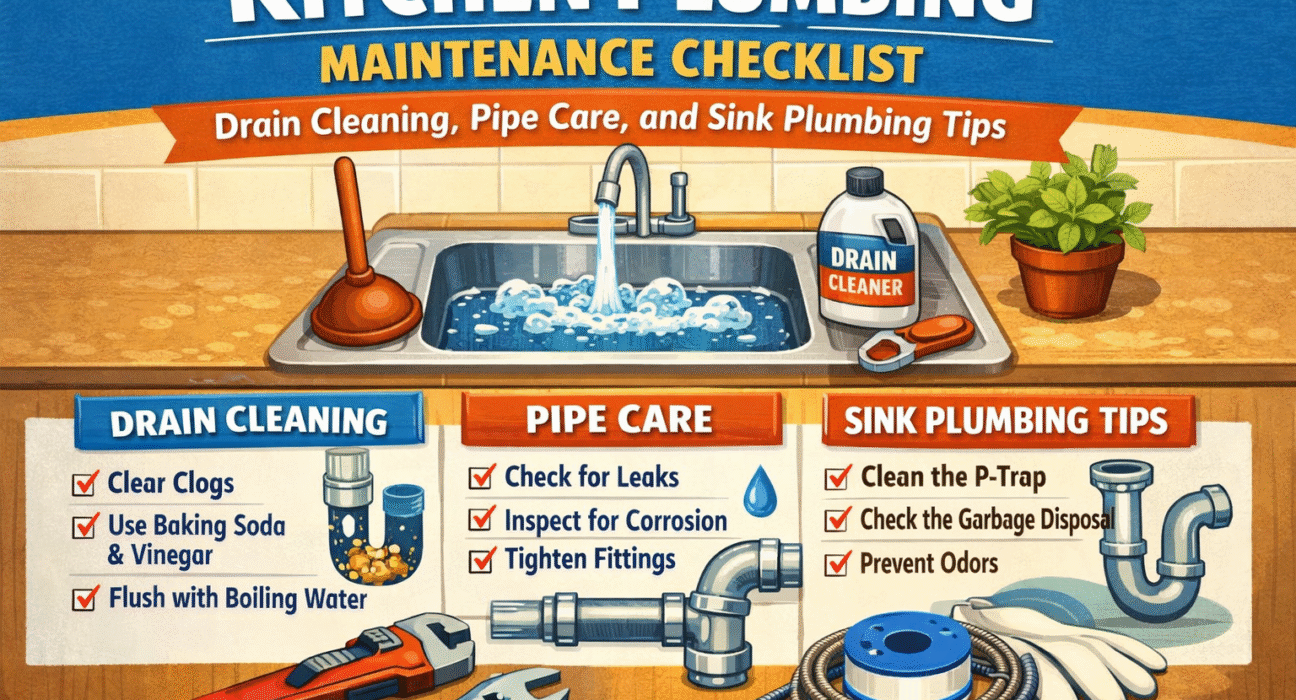
We have created a well-structured checklist for kitchen plumbing maintenance so that your system runs smoothly. This guide breaks down drain cleaning, pipe care, sink plumbing, DIY steps, and when to call a professional plumber.
Professional Help Needed When:
“Whether it is a machine, human, or system, it costs less to maintain than to repair.” So your best option is to choose kitchen plumbing maintenance over emergency repairs.,
Why Kitchen Plumbing Maintenance Is Important
Kitchen plumbing maintenance catches small problems before they become expensive emergencies. Regular maintenance extends the life of your fixtures and pipes. Your garbage disposal lasts longer when you clean it properly. Your drain pipes stay clear when you prevent grease buildup. Your faucet seals don’t fail when you address minor drips early. Water damage from neglected plumbing reduces property values and creates health hazards. Insurance companies may deny claims for damage caused by poor maintenance. Taking care of your kitchen sink plumbing protects your investment.Kitchen Plumbing Maintenance Checklist
1. Kitchen Drain Cleaning and Maintenance
Kitchen drain cleaning and maintenance is the most critical step because when you wash dishes, kitchen drains accumulate grease and food particles, which can clog the drain. DIY Drain Cleaning Steps:- Remove and clean the sink strainer weekly
- Flush drains with hot water after heavy use
- Use baking soda + vinegar monthly
- Avoid chemical drain cleaners (they damage pipes)
- Water drains slowly, even after cleaning
- Gurgling sounds occur
- Foul odors return quickly
2. Kitchen Sink Plumbing Inspection
Kitchen sink plumbing includes the faucet, shut-off valves, P-trap, supply lines, and drain connections. Checklist:- Check under-sink pipes for moisture
- Tighten loose slip nuts
- Inspect rubber washers and seals
- Test shut-off valves twice a year
3. Kitchen Pipe Maintenance
Kitchen pipe maintenance prevents corrosion, pinhole leaks, and water damage inside walls.| Pipe Type | What to Check | Frequency |
| PVC | Cracks, loose joints | Every 6 months |
| Copper | Green corrosion | Annually |
| PEX | Bulging or kinks | Annually |
- Pipes discolor or rust
- Water pressure drops
- Repeated leaks occur
4. Garbage Disposal Maintenance
Kitchen plumbing maintenance must include the garbage disposal because it connects directly to your drain system. Monthly Care Steps:- Run cold water during use
- Grind ice cubes to clean blades
- Use citrus peels for odor control
- Never dispose of grease, bones, or fibrous foods
5. Faucet and Fixture Testing
Kitchen plumbing maintenance includes testing faucets to avoid wasted water and hidden leaks. Checklist:- Check for dripping when off
- Inspect the aerator for mineral buildup
- Confirm consistent water pressure
- Replace worn cartridges
6. Water Pressure & Flow Check
Kitchen plumbing maintenance ensures your system isn’t under stress. Signs of Pressure Issues:- Weak faucet flow
- Splashing water
- Banging pipes (water hammer)
Kitchen Plumbing Maintenance Cost Breakdown
Understanding costs helps you budget for regular maintenance and plan for replacements. This table shows typical expenses for common maintenance tasks.| Maintenance Task | DIY Cost | Professional Cost | Frequency |
| Drain Cleaning (Basic) | $5-15 | $100-200 | Quarterly |
| P-Trap Cleaning | $0 | $75-150 | Quarterly |
| Faucet Aerator Cleaning | $0 | $50-100 | Monthly |
| Garbage Disposal Cleaning | $2-5 | $80-120 | Monthly |
| Supply Line Replacement | $15-30 | $100-200 | Every 5-7 years |
| Shut-Off Valve Replacement | $20-40 | $150-300 | As needed |
| Professional Inspection | N/A | $150-300 | Annually |
| Drain Snake Purchase | $25-50 | N/A | One-time |
Signs You Need Kitchen Plumbing Maintenance
Kitchen plumbing maintenance is needed if you notice:- Slow or standing water in the sink
- Recurrent clogs
- Bad drain odors
- Water stains under cabinets
- Mold growth
- Noisy pipes
- Rising water bills
Emergency Kitchen Plumbing Kit
Every homeowner needs basic tools for unexpected plumbing issues. Stock these items for quick repairs and maintenance. Essential Tools- Adjustable pliers or pipe wrench
- Basin wrench for tight spaces
- Standard plunger
- Hand-held drain snake (25-foot)
- Bucket for catching water
- Flashlight for under-sink visibility
- Teflon tape for threaded connections
- Pipe sealant or putty
- Faucet aerators (multiple sizes)
- P-trap washers
- Supply line (braided steel)
- Garbage disposal splash guard
- Drain stoppers
- Various O-rings and washers
- Baking soda
- White vinegar
- Drain brush
- Old toothbrush for tight spaces
- Microfiber cloths
- Rubber gloves
FAQ
How often should kitchen plumbing be maintained?
Perform basic kitchen plumbing maintenance monthly, including leak checks and disposal cleaning. Schedule quarterly drain treatments and annual professional inspections. High-use households benefit from more frequent professional service.Why is kitchen plumbing maintenance important?
Regular maintenance prevents expensive emergency repairs and water damage. Small problems caught early cost far less to fix than major failures. Maintenance extends fixture life and protects your home’s value.What does kitchen plumbing maintenance include?
Complete maintenance covers supply lines, drain systems, garbage disposals, faucets, and shut-off valves. Tasks range from simple cleaning to component replacement. Both DIY and professional services play important roles.What are signs you need for kitchen plumbing maintenance?
Slow drains, persistent odors, reduced water pressure, unusual sounds, and visible corrosion all indicate maintenance needs. Multiple clogged drains suggest main line problems requiring professional attention. Address warning signs immediately to prevent escalation.