
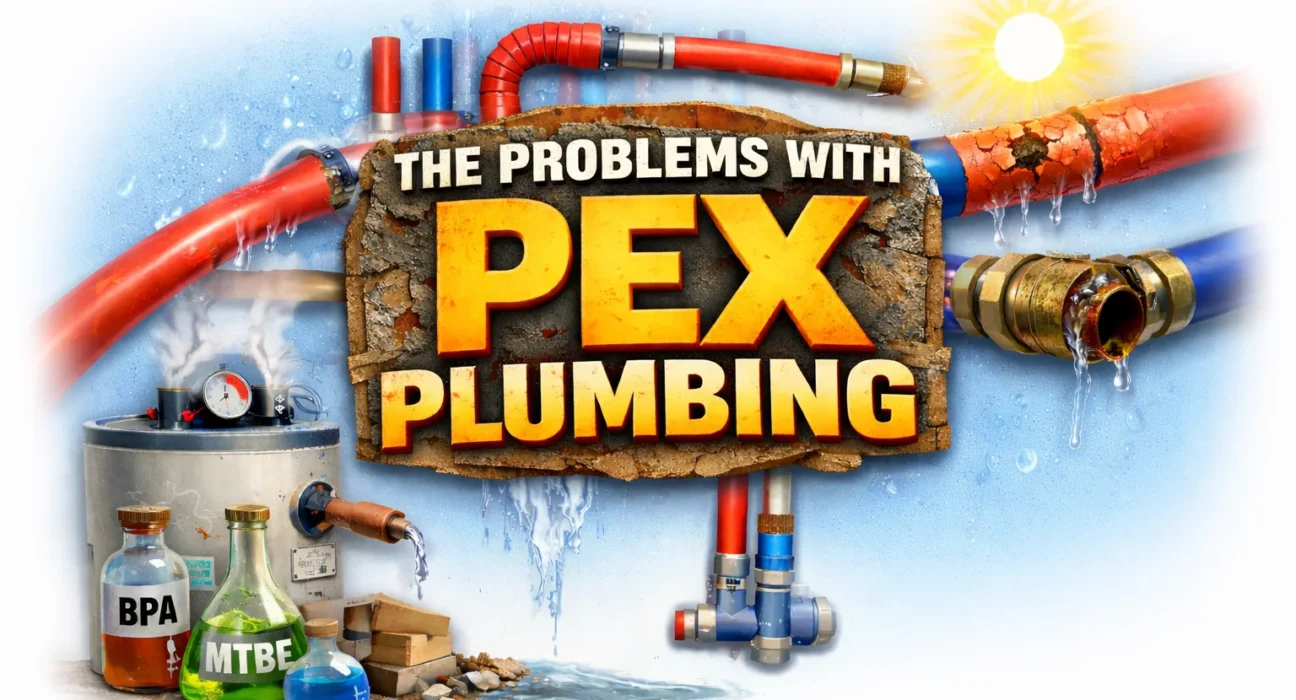
PEX (cross-linked polyethylene) has become increasingly popular in residential plumbing over the past few decades. In this comprehensive guide, we will explore the problems with PEX plumbing that contractors might not tell you about, help you understand the real risks, and give you the information you need to make informed decisions about your home plumbing system.
What Is PEX Plumbing?
PEX plumbing refers to pipes made from cross-linked polyethylene, a flexible plastic material that has been used in European plumbing systems since the 1960s and gained popularity in the United States starting in the 1980s. The cross-linking process creates bonds between polymer chains, making the material more durable and heat-resistant than standard polyethylene.
Types of PEX Pipe
There are three main types of PEX pipe, each manufactured using different cross-linking methods:
PEX-A:
PEX A is created using the peroxide (Engel) method and offers the most flexibility and the best shape memory, allowing kinked pipes to be restored using heat.
PEX-B
PEX-B uses the silane (moisture cure) method and is the most commonly available type in the United States. It is stiffer than PEX-A and cannot be restored if kinked, but it is more affordable.
PEX-C
PEX-C is produced through electron beam radiation and is the stiffest of the three types
PEX became popular because it is significantly cheaper than copper piping, easier for DIYers to install, and flexible enough to navigate around obstacles without requiring as many fittings. However, these advantages come with serious drawbacks that many homeowners only discover years after installation.
7 Major Problems with PEX Plumbing
1. Chemical Leaching Concerns
One of the most alarming issues with PEX plumbing is its potential to leach chemicals into your drinking water. Studies have found that various PEX pipes can release over 150 different contaminants into water, including methyl tert-butyl ether (MTBE), toluene, and other volatile organic compounds.
The chemical leaching is problematic when water sits stagnant in the pipes for extended periods. Some PEX formulations have also been found to contain BPA and other endocrine-disrupting chemicals, though manufacturers have been working to reduce these compounds in newer products.
PEX manufacturers claim their products are safe and meet NSF/ANSI standards, the long-term health effects of exposure to these chemicals remain unclear, especially for vulnerable populations like infants, pregnant women, and those with compromised immune systems.
2. UV Light Degradation
PEX is extremely vulnerable to ultraviolet light exposure. Even short periods of direct sunlight can cause the material to become brittle and weak, leading to cracks and eventual failure.
This limitation means PEX cannot be used for outdoor plumbing applications or in areas where pipes might be exposed to sunlight through windows. If you’ve ever seen PEX pipe installed outdoors or in direct sunlight, it is a serious installation error that will likely result in premature failure.
The UV sensitivity also creates challenges during construction. PEX pipes stored outdoors at job sites can degrade before they are even installed. Many manufacturers recommend that PEX not be exposed to sunlight for more than 30 days before installation, but this guideline is not always followed on busy construction sites.
3. Rodent Damage
Mice, rats, and other rodents can easily chew through PEX piping. PEX plastic composition makes it vulnerable to their sharp teeth.
Rodent damage to PEX pipes can lead to catastrophic water damage, often in hard-to-reach areas like walls and ceilings where the damage is not immediately visible. By the time you notice water stains, significant structural damage may have already occurred.
4. Chlorine and Oxidation Issues
Municipal water systems commonly use chlorine as a disinfectant, but this same chemical can significantly shorten the lifespan of PEX piping. Chlorine causes oxidative degradation of the cross-linked polyethylene, making the pipes brittle and prone to cracking over time.
The rate of degradation depends on several factors including chlorine concentration, water temperature, and the specific formulation of PEX being used. Hot water accelerates this process, which is particularly concerning since PEX is frequently used for hot water distribution lines.
5. Fitting and Connection Failures
Early PEX systems used brass fittings that were prone to dezincification, a corrosion process that causes the zinc to leach out of the brass alloy, leaving behind weak, porous copper.
Several major PEX fitting manufacturers have faced class-action lawsuits due to widespread fitting failures. The Kitec plumbing system, installed in millions of homes between 1995 and 2007, became notorious for catastrophic failures due to defective brass fittings. Homeowners with Kitec systems have experienced sudden bursts, flooding, and extensive property damage.
Zurn PEX systems faced lawsuits over their crimp-style fittings, which were found to crack and fail prematurely. While manufacturers have since improved their fitting designs, the long-term durability of current PEX fittings remains uncertain.
Even properly installed PEX fittings create potential weak points in the system. Crimp rings can be over-tightened or under-tightened, both of which can lead to leaks. Expansion fittings require specialized tools and proper technique, and errors during installation may not become apparent for years.
6. Temperature and Pressure Limitations
PEX has significant limitations when it comes to high temperatures and pressures. The material cannot be installed within 18 inches of a water heater or other heat source, as the elevated temperatures can cause the pipe to deform, weaken, or even melt.
This restriction creates awkward transitions in many plumbing systems, where copper or another approved material must be used near the water heater before transitioning to PEX. These transition points create additional potential leak locations and increase installation complexity.
PEX also has a lower pressure rating than copper piping, particularly at elevated temperatures. While this is rarely an issue in normal residential applications, it can be a concern in systems with high water pressure or in commercial settings.
The maximum temperature rating for PEX is typically around 200°F, but operating at these higher temperatures significantly reduces the pipe’s lifespan. For hot water distribution at typical residential temperatures (120-140°F), PEX should last longer, but it still degrades faster than metal piping would under the same conditions.
7. Water Taste, Odor, and Quality Issues
Many homeowners with PEX plumbing report an unpleasant plastic taste or chemical smell in their water, particularly when the system is new or when water has been sitting in the pipes for several hours.
While manufacturers claim this odor is harmless and will dissipate over time, it raises legitimate concerns about water quality and the unknown compounds being introduced into your drinking water. The fact that you can taste or smell something indicates that chemicals are indeed leaching from the pipes.
PEX vs. Copper vs. CPVC
Understanding how PEX compares to alternative plumbing materials can help you make informed decisions about your home’s plumbing system.
Copper piping
Copper piping has been the gold standard in residential plumbing for decades. It does not leach chemicals, is resistant to UV light and rodents, and can last 50-70 years or more with proper installation. Copper is also recyclable and can handle high temperatures and pressures. The main drawbacks are higher material and installation costs, potential for corrosion in acidic water, and the risk of theft due to copper’s scrap value.
CPVC (chlorinated polyvinyl chloride):
CPVC is another plastic alternative that’s been used since the 1960s. It is less expensive than copper but more expensive than PEX, handles heat better than PEX, and is more rigid which can make installation more challenging. However, CPVC has its own issues including brittleness in cold temperatures, potential for cracking when exposed to certain chemicals, and degradation over time.
Cost comparison:
PEX is the least expensive option, with material costs 25-50% lower than copper. Installation is also faster and requires less skilled labor. Copper is the most expensive initially but may offer better long-term value. CPVC falls in the middle on both cost and complexity.
Durability and lifespan:
Copper can last 50-70+ years, CPVC around 40-50 years under ideal conditions, and PEX’s real-world lifespan is still uncertain but appears to be 20-40 years depending on water quality and installation conditions.
When PEX Might Still Be Acceptable
PEX is not entirely without merit in certain situations. For temporary or short-term installations where the plumbing wo not need to last decades, PEX can be a cost-effective solution. Mobile homes, rental properties expected to be redeveloped, or emergency repairs might all be reasonable applications for PEX.
Radiant floor heating systems are one application where PEX actually performs well. The material’s flexibility makes it ideal for snaking through floors, and since the water in these systems is in a closed loop rather than being used for drinking, the chemical leaching concerns are less relevant.
For homeowners on extremely tight budgets who simply cannot afford copper piping, PEX may be the only feasible option. In these cases, choosing the highest quality PEX-A from a reputable manufacturer, ensuring professional installation, and planning for potential earlier replacement can help mitigate some of the risks.
Making the Right Decision for Your Home
The decision about whether to use, keep, or replace PEX plumbing in your home depends on multiple factors including your budget, how long you plan to stay in the home, local water quality, and your priorities regarding water purity and system longevity.
If you’re building a new home or doing a complete plumbing renovation and can afford it, copper piping remains the most reliable long-term choice. Yes, it costs more upfront, but it provides peace of mind, better water quality, and proven durability that will likely outlast PEX by decades.
Your home plumbing is critical infrastructure that affects your family’s health, safety, and comfort every single day. It’s worth investing the time to research your options thoroughly and make an informed decision you will be comfortable with for years to come.