Why Do Pool Plumbing Leaks Happen
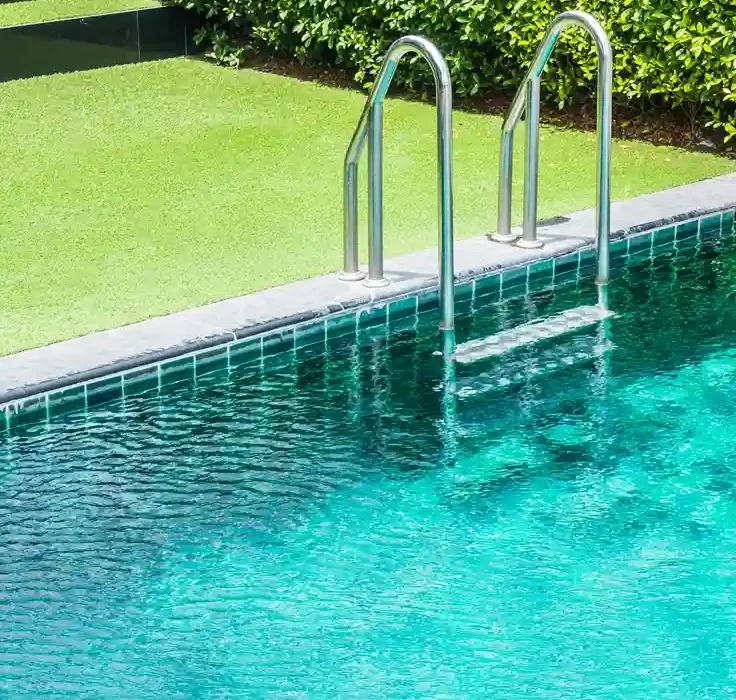
Pool plumbing leak repair is important for homeowners to prevent erosion or pump damage as most plumbing is below the deck or soil and small cracks can lose hundreds of gallons a day, often unnoticed by homeowners at first. Pool plumbing leak repair often begins with a loose PVC fitting, pipes shifting underground, or pump-side connections weakening.
How to Find a Pool Plumbing Leak
Homeowners can usually see most leaks by watching the water levels. If the pool water is dropping more than ¼–½ inch a day, it’s generally a sign of a problem in the plumbing, not evaporation.
Common signs of trouble:
- Air bubbles blowing out of the return jets
- The pump is losing prime on a regular basis
- wet patch on the pool deck
- Higher water bills
- Trouble maintaining chemical balance
If you have outside fixture problems, like an outdoor leaky faucet , you might see the same signs when your pool plumbing starts to fail. These symptoms are seen more often with structural leak repairs as compared to swimming pool plumbing leak repairs.
How to Find a Pool Leak
1. Turn off the water features
Waterfalls, bubblers and spa spillways conceal changes in the plumbing pressure. Switch off all systems except the pump.
2. Conduct the Bucket Test
This helps to confirm if you really have a leak.
- Fill a bucket with pool water.
- Put it on a step.
- Mark the water level in and out.
- Hold 24 hours.
If the pool level drops faster than the bucket the plumbing is in play.
3. Circulation Mode Only
Run the pump only . If you have a leak on the suction side or the pressure side .
- Suction line leak Bubbles in pump basket
- Basement water pool → return line leak
This helps to narrow down if it is pool suction line leak repair or pool return line leak repair before you open anything.
4. Test Pressure Lines
Homeowners can borrow a pressure-testing kit.
Pressurize each pipe individually. Skimmer, main drain, returns, vac line.
A quick drop in PSI confirms the leaking line.
Diagram of Pool Plumbing Leak Repair Location
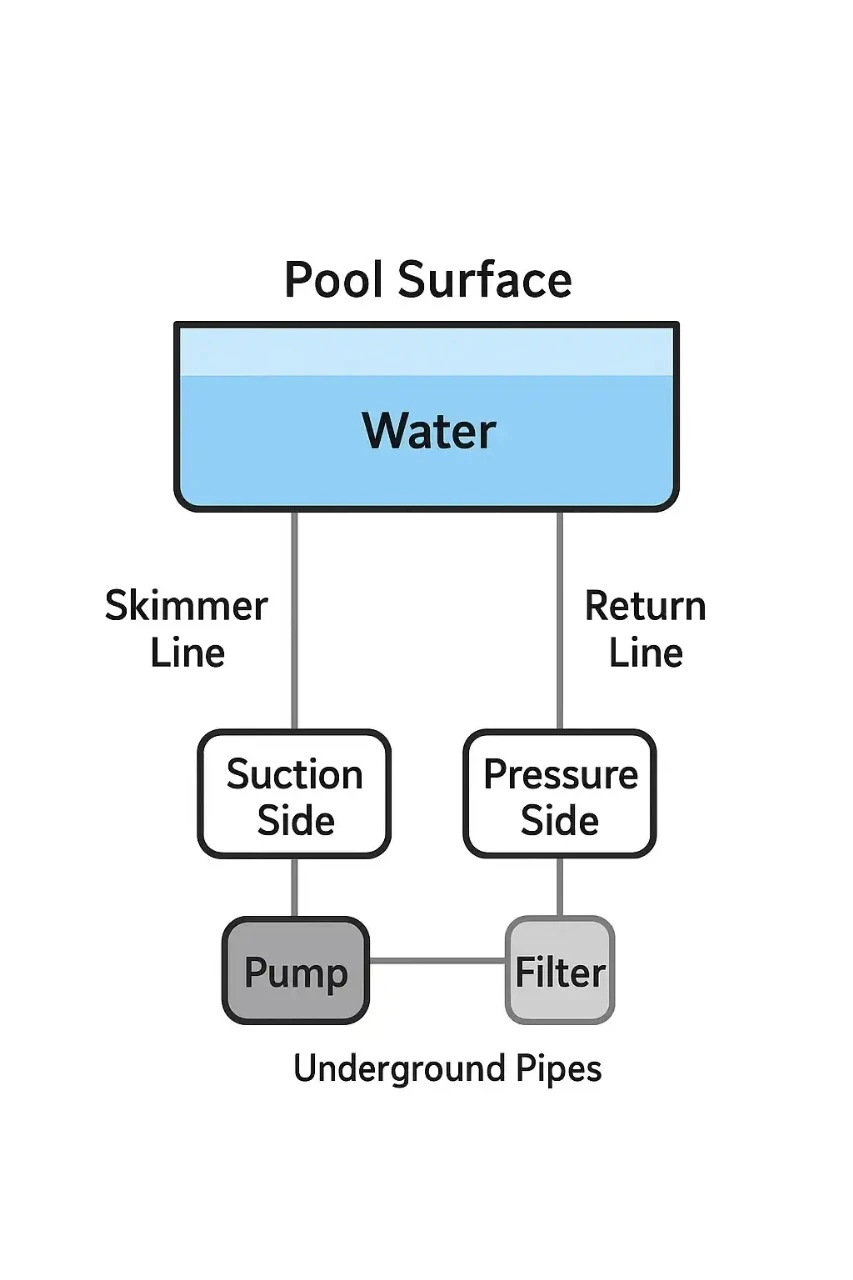
This simple diagram will help you to see where most pool plumbing leak repair problems occur.
How to Fix a Pool Pipe Leak Yourself
1. Pipe Exposure (if required)
Leaks often can be fixed without digging, but if the pressure test shows a short section, you might have to dig a few inches of soil out around it.
2. Clean the Area Well
For glue or epoxy to bond well, PVC must be dry and free of debris.
3. Choose the Repair Method to Use
PVC Coupler Repair (Old School)
Ideal for obvious cracks or broken fittings:
- Cut out the damaged section
- Dry fit replacement couplers
- PVC adhesive glue
Pool Plumbing Leak Repair Comparison Chart
| Repair Method | Best For | Pros | Cons |
| PVC Cut-and-Replace | Visible cracks, broken joints | Cheap, straightforward | Requires digging |
| Trenchless Epoxy | Long underground leaks | Cost-effective, time-saving, durable | Needs pro equipment |
| Patch Epoxy Putty | Small hairline cracks | Fast DIY fix | Not a long-term solution |
FAQ
How to repair an inground pool plumbing leak?
Find the leaking line using a pressure test, expose only the damaged area, and repair it using PVC couplers or trenchless epoxy lining.
How do you fix pool leaks?
Pool plumbing leak repair can be done by identifying whether the leak is structural or plumbing-related. Repair cracked pipes, leaking fittings, or failing underground lines using cut-and-replace or epoxy methods.
How to find a leak in pool plumbing?
Use the bucket test, observe pump behavior, and pressure test each plumbing line.
What is the most common area for pool leaks?
Skimmer lines and return lines are the most common failure points due to shifting soil and vibration near the pump.
What can I use to stop my pool from leaking?
Use PVC couplers, epoxy putty, or trenchless epoxy lining depending on leak severity.
Can you fix a pool leak without draining?
Yes, most pool plumbing leak fix can be done without draining the pool, especially trenchless epoxy repairs.