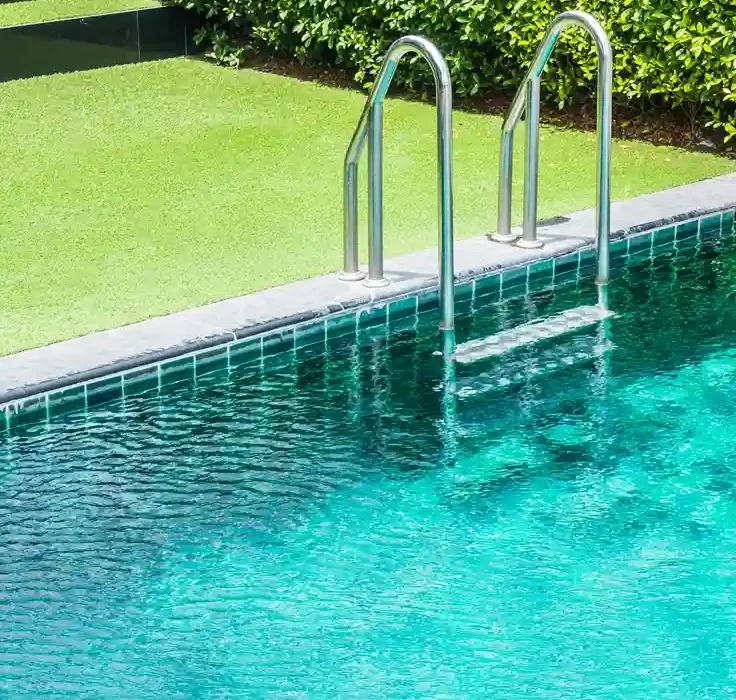
Why Pool Plumbing Leaks Happen
Homeowners often don’t notice the leak right away because most plumbing sits below the deck or soil, small cracks can lose hundreds of gallons a day, which makes pool plumbing leak repair important if you want to prevent erosion or pump damage. Pool plumbing leak repair usually starts when there is a loose PVC fitting, underground pipes shift, or pump-side connections weaken.How to Tell if You Have a Pool Plumbing Leak
Homeowners can catch most leaks by paying attention to water levels. Pool water that drops more than ¼–½ inch per day usually points to plumbing issue rather than evaporation. Common warning signs:- Air bubbles blowing from the return jets
- The pump is losing prime regularly
- Wet spots around the pool deck
- Higher water bills
- Difficulty maintaining chemical balance
How to Find a Leak in Pool
1. Turn Off All Water Features
Waterfalls, bubblers, and spa spillovers mask plumbing pressure changes. Shut everything down so only the pump system operates.2. Perform the Bucket Test
This helps confirm whether you actually have a leak.- Fill a bucket with pool water.
- Set it on a step.
- Mark the water level inside & outside.
- Wait 24 hours.
3. Switch to Circulation Mode Only
Running only the pump helps identify suction-side or pressure-side leaks.- Bubbles in the pump basket → suction line leak
- Water pooling underground → return line leak
4. Pressure Test the Lines
Homeowners can rent a pressure testing kit. Pressurize one pipe at a time: skimmer, main drain, returns, and vac line. A fast PSI drop confirms the leaking line.Pool Plumbing Leak Repair Location Diagram
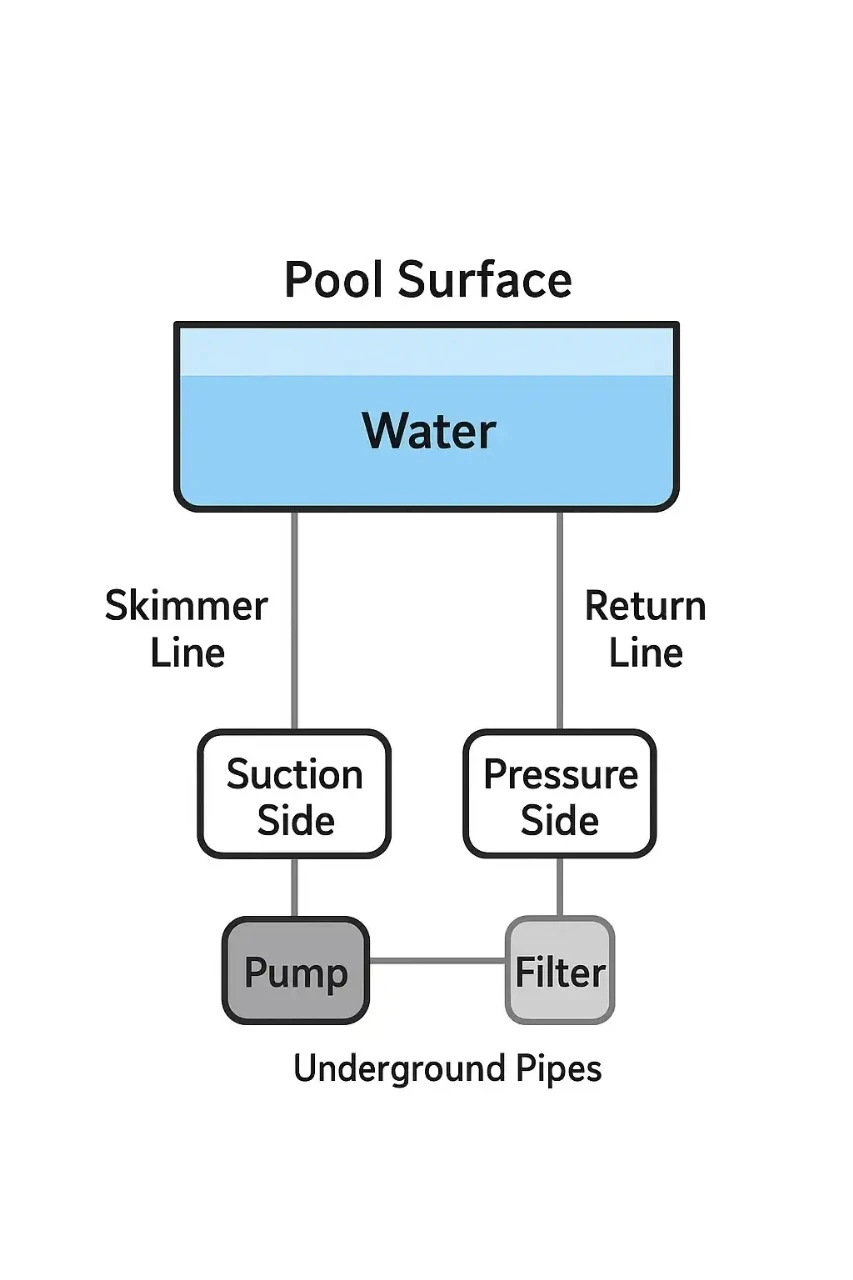 This simple diagram helps visualize where most pool plumbing leak repair issues occur.
DIY Pool Pipe Leak Repair
1. Expose the Pipe (Only If Necessary)
Many leaks can be fixed without digging, but if the pressure test isolates a short section, you may need to remove a few inches of soil around it.2. Clean the Area Thoroughly
PVC must be dry and free of debris for glue or epoxy to bond well.3. Decide Which Repair Method to Use
PVC Coupler Repair (Traditional Method) Great for obvious cracks or broken fittings:
- Cut out damaged section
- Dry-fit replacement couplers
- Glue with PVC cement
Modern Trenchless Repair (No-Dig Epoxy Lining)
Perfect for long underground pipe runs where digging isn’t ideal. Epoxy lining coats the inside of the pipe and seals cracks from within.
Homeowners often wonder about pool plumbing leak repair because trenchless methods avoid deck demolition. If you prefer fast fixes, trenchless repair is the most practical option.Pool Plumbing Leak Repair Comparison Chart
| Repair Method | Best For | Pros | Cons |
| PVC Cut-and-Replace | Visible cracks, broken joints | Cheap, straightforward | Requires digging |
| Trenchless Epoxy | Long underground leaks | Cost-effective, time-saving, durable | Needs pro equipment |
| Patch Epoxy Putty | Small hairline cracks | Fast DIY fix | Not a long-term solution |
DIY vs Professional Pool Leak Repair
Pool plumbing leak repair can be done by homeowners if the problem is minor, but professional tools are often required for buried pool plumbing leak fix. You may be comfortable repairing a cracked fitting, but long suction or return lines need cameras, pressure rigs, and epoxy injection systems.How to Repair Inground Pool Plumbing Leak (When You Should DIY vs Call a Pro)
DIY When:
- Leak location is exposed
- Damage is small and visible
- You’re replacing a cracked fitting
- You’re fixing a simple PVC joint
Call a Pro When:
- Leak is below the deck
- Pressure test shows a long underground failure
- Suction and return lines both lose pressure
- You need trenchless epoxy relining
Preventing Future Pool Leaks
Pool owners can reduce plumbing leaks by:- Keeping water chemistry stable
- Checking pump fittings every season
- Inspecting PVC joints annually
- Using flexible PVC only where necessary
- Protecting pipes from shifting soil